.png)


5 Best Pixelz Alternatives for E-commerce Photo Editing (2026)
Pixelz has built its reputation on volume. The company retouches product images for ecommerce brands using a combination of AI-assisted tools and a human retouching team, and its Professional plan runs $95 a month with images priced from $0.95 each, based on Pixelz's own pricing page. That subscription-plus-per-image model works well for teams with predictable, steady catalog volume. It works less well for teams whose needs shift month to month, or who want image generation capability rather than pure retouching of existing photos.
That gap is where most searches for Pixelz alternatives start. Some teams want a lower cost per image. Some have outgrown a retouching-only service and want AI-generated product scenes or on-model shots without a physical photoshoot. Some just want more control over turnaround time than a fixed subscription tier allows.
There is no single best alternative, because "alternative to Pixelz" covers at least two different categories of tool: AI image platforms you operate yourself, and outsourced retouching-as-a-service providers who handle production for you. I've grouped the five options below by what they actually replace, not just by price, so you can match the tool to the workflow you're trying to fix.
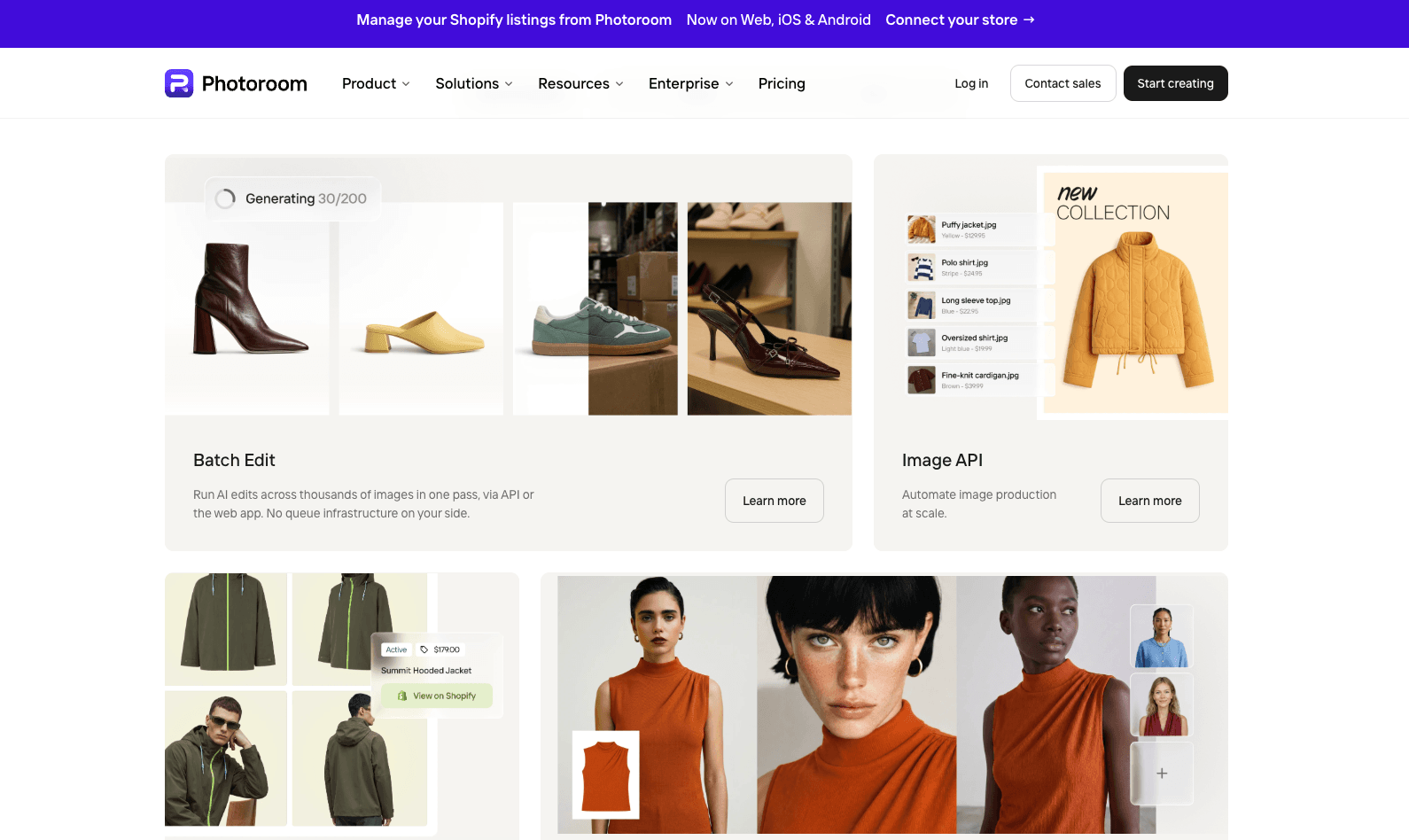
1. Photoroom: AI-first editing for teams that want to skip retouchers entirely
Photoroom is the clearest AI-first alternative on this list. Instead of sending images to a retouching team, you edit and generate visuals yourself inside the platform, using tools like background removal, AI-generated backgrounds, and AI fashion models that place a garment on a virtual model without a physical shoot.
Photoroom's pricing runs on four tiers: Pro, Max, Ultra, and a custom Enterprise plan, each with a monthly AI credit pool and an export cap that reset every billing cycle. Based on multiple current pricing trackers, Pro starts around $7.50 to $8 a month billed annually, Max around $21 to $27, and Ultra around $83 to $99, though exact figures shift by billing cycle and region, so confirm the current number at checkout before budgeting against it.
The tier structure matters more than the sticker price. AI Fashion Models and the Video Generator are gated by plan, and API or MCP access for automated workflows is billed separately from the app subscription itself. A team planning to pipe Photoroom into their own product feed needs to budget for that API cost on top of whatever consumer tier they pick, not instead of it.
Photoroom fits a specific profile: teams with someone who can own the editing work directly, moderate and fairly predictable image volume, and no need for a human retoucher to catch the details an AI model still misses on fine texture, tricky fabrics, or brand-specific styling.

2. Pixofix: retouching-as-a-service with AI production built in
Pixofix sits between the two categories above. Instead of a self-serve AI tool or a retouching-only outsourcer, we combine both: a production team that handles retouching, color correction, and background work, plus AI-generated imagery (on-model shots, lifestyle scenes, product visuals) for brands that want new content without a physical shoot.
Pricing starts at $1.00 per image on the pay-as-you-go tier for teams processing under 1,000 images a month, with custom enterprise pricing for higher volume. There's no separate software subscription layered on top the way there is with Photoroom or Claid, since the price covers the finished image, not access to a tool you operate yourself.
I think the honest way to frame where we fit is this: if your team wants to keep editing in-house and just needs a faster tool, Photoroom or Claid will likely serve you better, since you're paying for software, not production capacity. If you need a partner to take raw or existing photos and consistently deliver finished, on-brand images at real catalog volume, that's the gap we're built for. Our photo retouching service is specifically for that use case: large SKU counts, seasonal drops, and the kind of steady monthly volume Pixelz's Professional plan is also aimed at, but without the fixed per-image markup on top of a subscription.
Where we're not the right fit: teams that want to control the AI generation process themselves, prompt by prompt, inside their own workflow. That's a real use case, and it's what Photoroom and Claid are built for, not what a managed service does well.
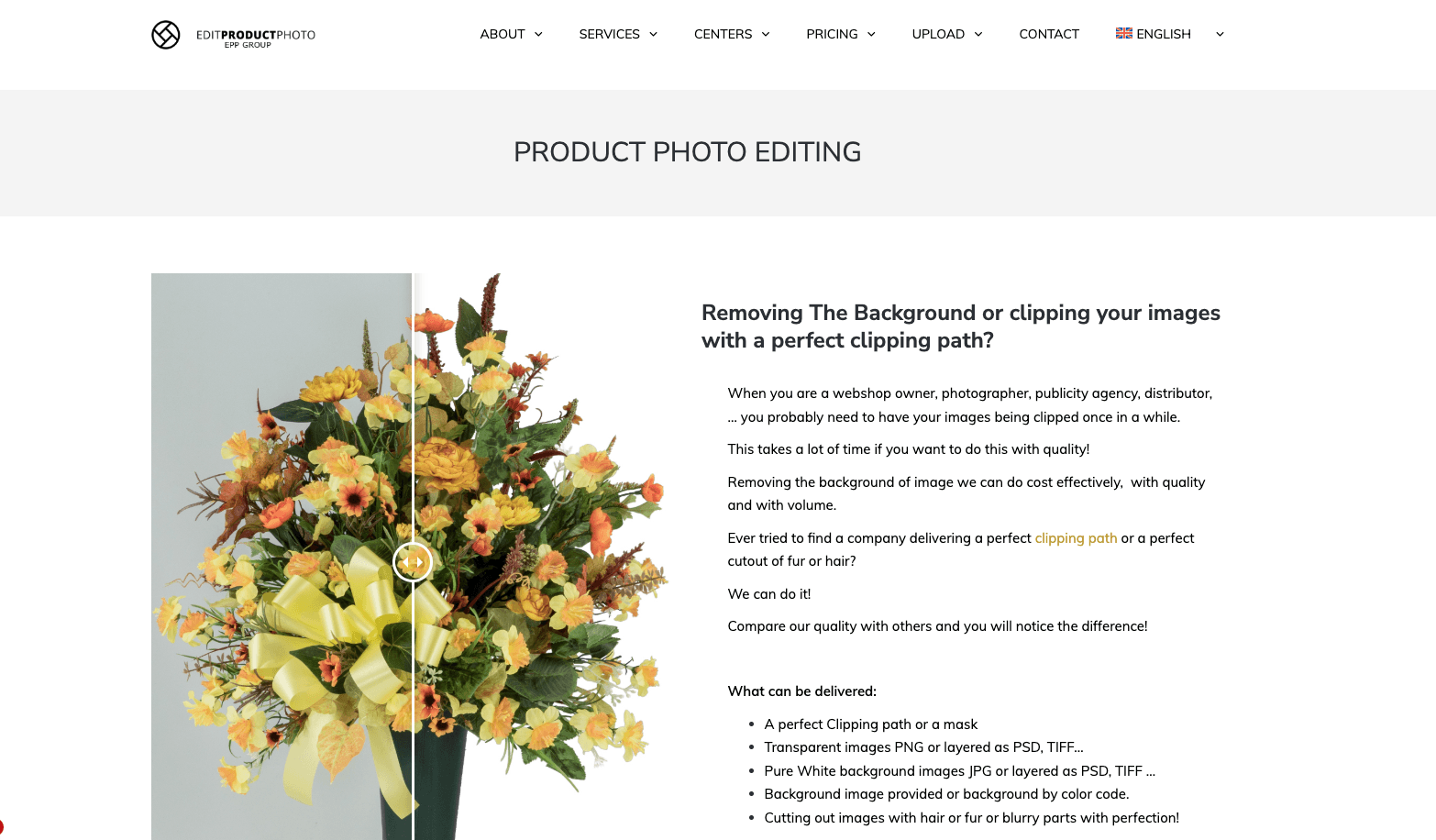
3. EditProductPhoto: boutique outsourced retouching, custom quotes only
EditProductPhoto is part of the EPP Group, a Netherlands-based outsourcing company with an editing team based in Vietnam. They handle product photo editing (background removal, retouching, clipping paths, shadows) alongside sister services for real estate and portrait editing under the same group, and describe themselves as working with photo studios, agencies, and individual sellers worldwide.
It's worth being upfront about a limit here: EditProductPhoto doesn't publish pricing anywhere I could find, and their own marketing claims a cost "typically 30% lower than Pixelz." I could not verify that figure against any independent source or transparent rate card, so treat it as an unverified vendor claim rather than a confirmed price comparison. If cost is your deciding factor, get a direct quote before assuming that gap holds for your image volume and complexity.
Where this fits: teams that want a smaller, boutique outsourcing relationship rather than a large-scale platform, and who are comfortable requesting a custom quote instead of comparing published rate cards. It's a narrower fit than Pixelz or Pixofix, both of which publish at least a starting price publicly.
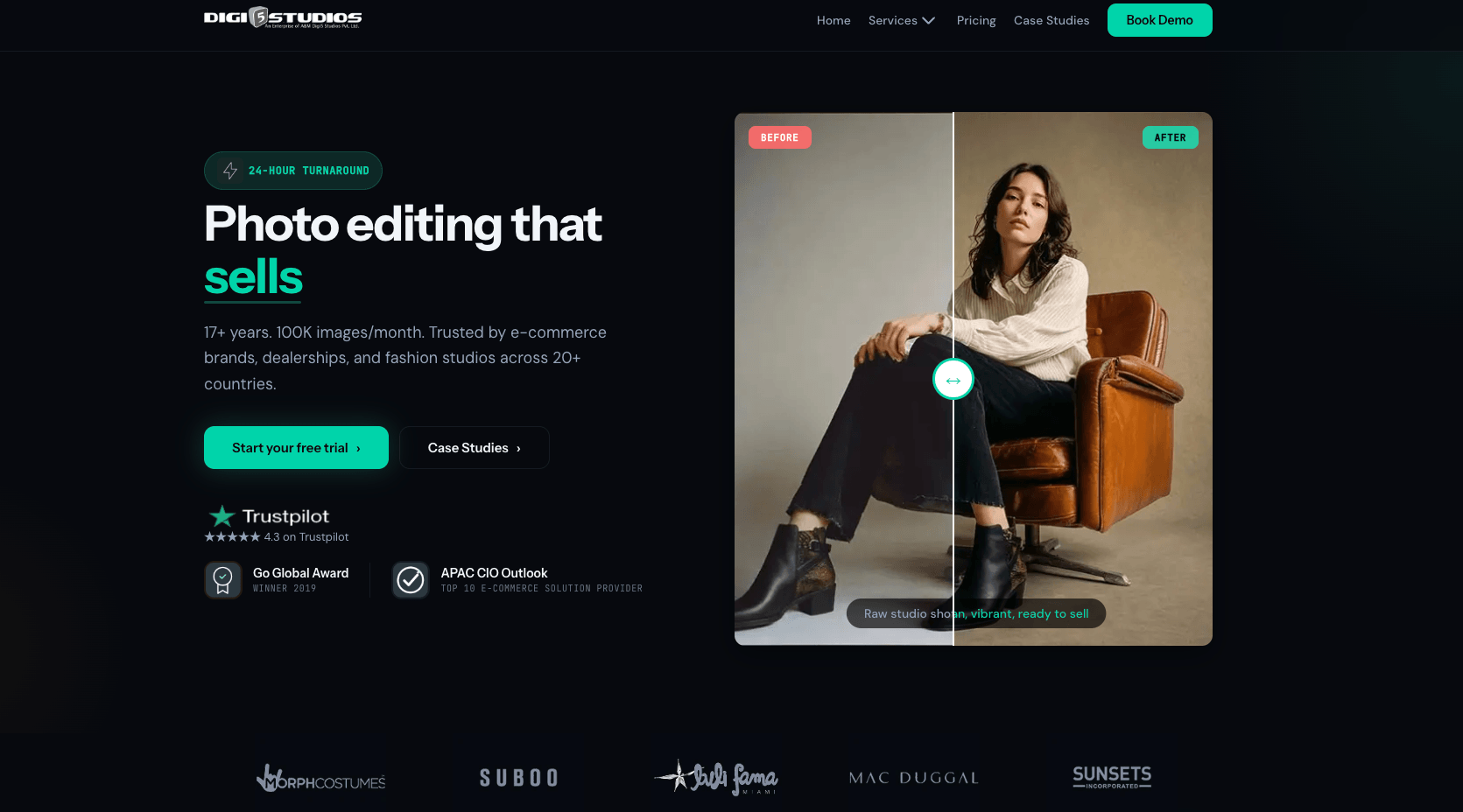
4. Digi5 Studios: pay-per-image retouching without a subscription
Digi5 Studios is a photo retouching outsourcer with over 17 years in business, a team the company states is 250+ editors, and a modest but genuine review presence on Trustpilot (4 stars from 8 reviews at the time of writing). They cover ecommerce, fashion, automotive, and real estate retouching, positioning themselves as a per-image alternative to subscription-based services.
Pricing is where an inconsistency turned up. Digi5's homepage advertises editing starting at $0.20 per image, but a separate service page on their own site lists product photo retouching starting at $0.50 per image. The two don't agree, so treat $0.50 as the more specific, currently-documented starting rate for actual product retouching work, and confirm the real number directly with them before budgeting, since homepage banner pricing and service-page pricing don't always cover the same scope of work.
One claim worth flagging as unverifiable: a "100% client retention for 17 years" figure sometimes cited for Digi5. That claim doesn't appear anywhere on Digi5's own site. What is published is a separate 90%+ employee retention rate, which measures staff turnover, not client retention, and isn't the same metric. Treat any client-retention figure for Digi5 as unconfirmed until the company documents it directly.
Digi5's real advantage over Pixelz is straightforward: no monthly subscription fee, so a team with unpredictable or seasonal volume pays only for what they send, rather than carrying a fixed monthly cost during slow months.
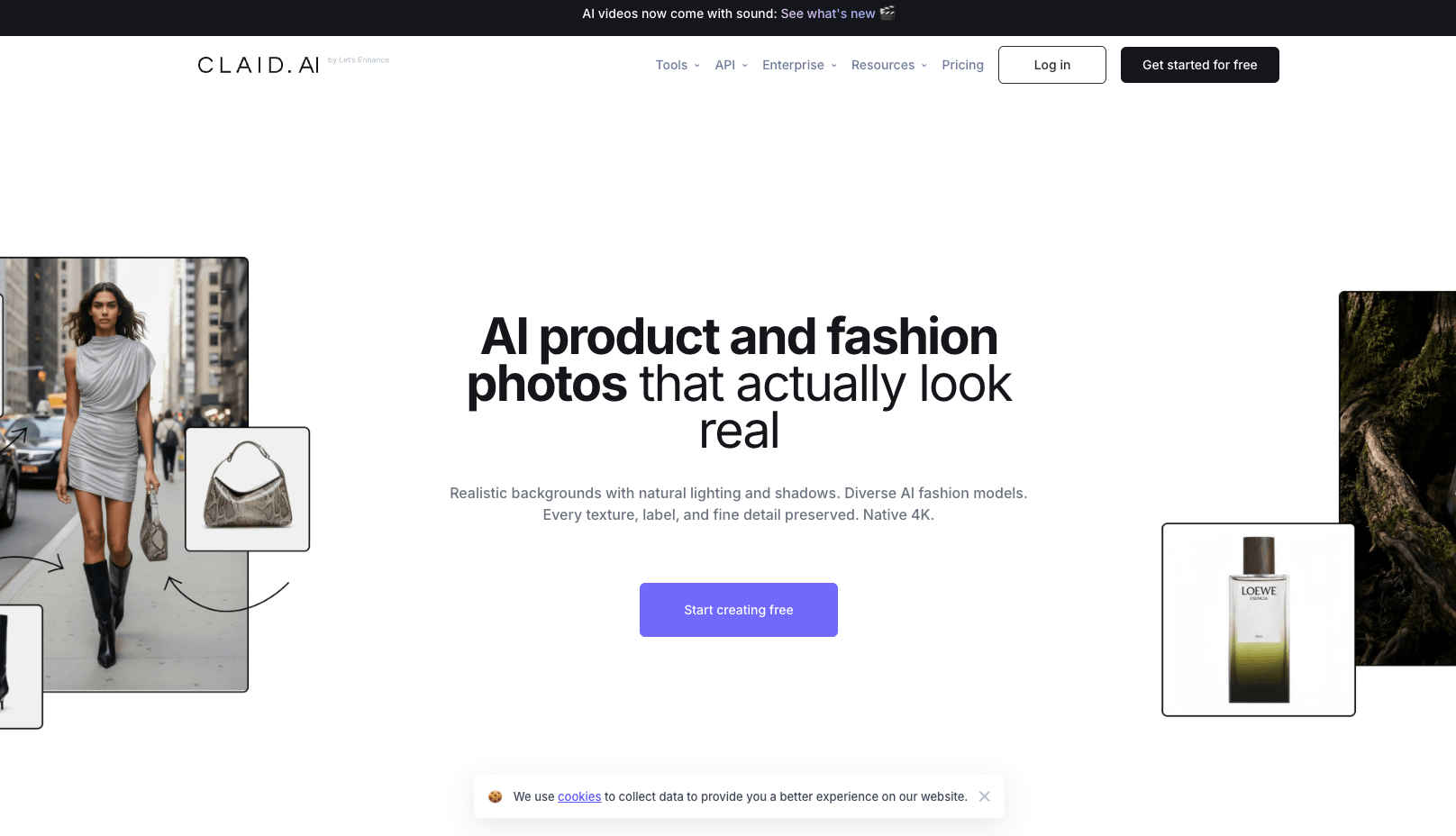
5. Claid.ai: AI editing and generation via API, built for developer workflows
Claid.ai is the second AI-first tool in this lineup, but it's built differently from Photoroom. Where Photoroom leans toward a hands-on editing app with API access layered in, Claid is built around a credit system that spans both a web studio and a developer API, aimed at teams that want to automate image processing into their own product pipeline rather than edit images one by one in a browser.
Pricing, confirmed directly on Claid's pricing page, runs on web plans starting with a free tier (50 credits), an Essential plan at $15 a month for 500 credits, and a Pro plan at $49 a month for 2,000 credits. Operations cost different credit amounts depending on complexity: background removal and enhancement cost less than AI-generated scenes or on-model fashion shots. For teams building their own integration, the API is priced separately at $59 for a 1,000-credit bundle, with custom enterprise pricing above that.
Claid's stated use cases lean toward marketplaces and platforms with engineering resources: image standardization at scale, on-model fashion generation, and background generation that preserves product accuracy across large catalogs. That's a meaningfully different buyer than someone comparing Pixelz plans for a single ecommerce storefront. If your team doesn't have a developer to own the API integration, the web studio plans cover similar ground to Photoroom, and the choice between the two comes down to which credit system and feature set fits your catalog better.
Comparing Pixelz and its alternatives
The table below pulls together the verified pricing and model for each option. Treat the dollar figures as a starting point, not a final quote, since per-image cost changes with image complexity and volume on every service listed here.
A few things this table can't show. Pixelz and Pixofix both charge per finished image, so their real cost depends on how much retouching complexity each image needs, not just the base rate. Photoroom and Claid charge for platform access and AI credits, so actual monthly cost depends on how many credit-intensive features (AI-generated scenes, on-model shots) get used versus simpler tasks like background removal, which usually cost less. And two of the six providers here, EditProductPhoto and Digi5, don't have fully transparent public pricing, so a quote request is the only reliable way to compare them against the rest.
Evaluating features and technology
The real split among these six providers isn't AI versus no AI. All six use AI somewhere in their production process, including Pixelz and Digi5, both of which combine automation with human retouchers. The split that actually matters for choosing between them is who does the quality control, and whether the tool generates new imagery or only edits what's already been shot.
Photoroom and Claid.ai put you in the editor's seat. You're responsible for reviewing output, catching errors, and re-running a generation when the AI gets a shadow or a garment drape wrong. That's fine when your team has someone who can own that review step, and it's genuinely fast for straightforward background removal or simple product cutouts. It gets harder to trust at scale on anything with fine texture, complex fabric behavior, or brand-specific styling rules, since neither platform has a human checking every image against your style guide before it ships.
Pixelz, Pixofix, EditProductPhoto, and Digi5 all route images through human review as part of the base service, which is the tradeoff for a higher per-image cost than a pure AI tool. Where Pixofix differs from the other three human-reviewed options is generation capability: alongside retouching, our AI PDP and AI model workflows can produce new product and on-model imagery from an existing shot, rather than only correcting photos already on hand. That puts Pixofix and the two self-serve AI tools in the same conversation for teams that want new visuals without a physical shoot, just with a different amount of hands-on work required from your side.
API access is the other real differentiator. Pixelz, Photoroom, and Claid all offer one for automated, high-volume integration into an existing product pipeline. EditProductPhoto and Digi5 are manual submission workflows built for outsourcing, not integration.
Making the switch from Pixelz
Switching costs vary a lot depending on which alternative gets picked, and that's worth weighing alongside the price difference itself.
Moving to Photoroom or Claid means your team takes on the editing work Pixelz's retouchers used to handle. Budget time for someone to learn the platform, build templates or presets for your recurring product types, and set up an approval step before images go live, since neither tool has a human catching mistakes before delivery.
Moving to Pixofix, EditProductPhoto, or Digi5 keeps the outsourced model Pixelz customers are already used to, so the switch is closer to changing vendors than changing your workflow. The main adjustment is establishing a new style guide and spec sheet with the new provider and running a trial batch before committing full volume, standard practice with any outsourced retouching switch, and worth doing regardless of which provider gets chosen.
Either way, don't cancel Pixelz until a trial batch from the new provider has actually cleared your quality bar. A lower price or a faster interface isn't worth it if the output doesn't match your brand's current standard, and every provider on this list, Pixofix included, will look better in its own marketing than in a blind trial against your real product photos.
Finding the right fit
The choice mostly comes down to one question: operate the editing yourself, or hand it off to a team that does?
For control, with someone who can own the review step, Photoroom and Claid are the strongest AI-first options. Claid suits teams with a developer building an API integration; Photoroom suits a hands-on editor working directly in the app.
For handing off production on a subscription-free, pay-per-image model, Digi5 is worth a trial batch, with the caveat that you should confirm their real current rate directly rather than trust either published number. EditProductPhoto is a smaller, more manual option worth a quote if a boutique outsourcing relationship over a larger platform is specifically what you want.
For retouching and AI-generated imagery from the same provider, without switching tools depending on the task, that's the gap we built Pixofix to fill. It won't be the cheapest option here for simple background removal, and it's not the right fit if your team wants to prompt and generate images itself. For teams processing real catalog volume who'd rather hand off production entirely, a trial batch will tell you more than any comparison article can.
Whichever direction you go, the trial batch is the actual decision point, not the price on this page. Every provider here, Pixofix included, will read better in its own marketing copy than in a side-by-side test against your real product photos.


.png)
.png)
