.png)

5 Best PixelPhant Alternatives for Fashion & Ecommerce Brands in 2027
PixelPhant Compares Well on Paper
PixelPhant has built a real reputation in ecommerce photo editing, and it is not hard to see why. Pay-as-you-go pricing with no monthly subscription, a service scope that covers apparel, accessories, furniture, and more, and rates starting around $0.40 an image add up to a low-friction way to test a provider. I do not think it is a bad choice for most teams that land there. I also do not think it is the only choice worth making without a comparison first, the same way I would not want anyone picking Pixofix without one.
The comparisons I see teams actually run come down to three things: turnaround speed, whether a provider specializes in apparel and fashion specifically or handles product photography generally, and what happens once volume scales past a few hundred images a month. PixelPhant's numbers hold up well against those three. Whether they hold up for a specific catalog is a different question, which is exactly why a shortlist is more useful here than a single recommendation.
I limited this list to service providers, not DIY editing tools, since a browser-based background remover or a Shopify app solves a different problem than what PixelPhant does. Five companies made the cut: Pixofix, Pixelz, PathEdits, FixThePhoto, and Doopic. I evaluated all five, mine included, on pricing, turnaround, apparel-specific expertise, and where each one is not the right fit.
1. Pixofix
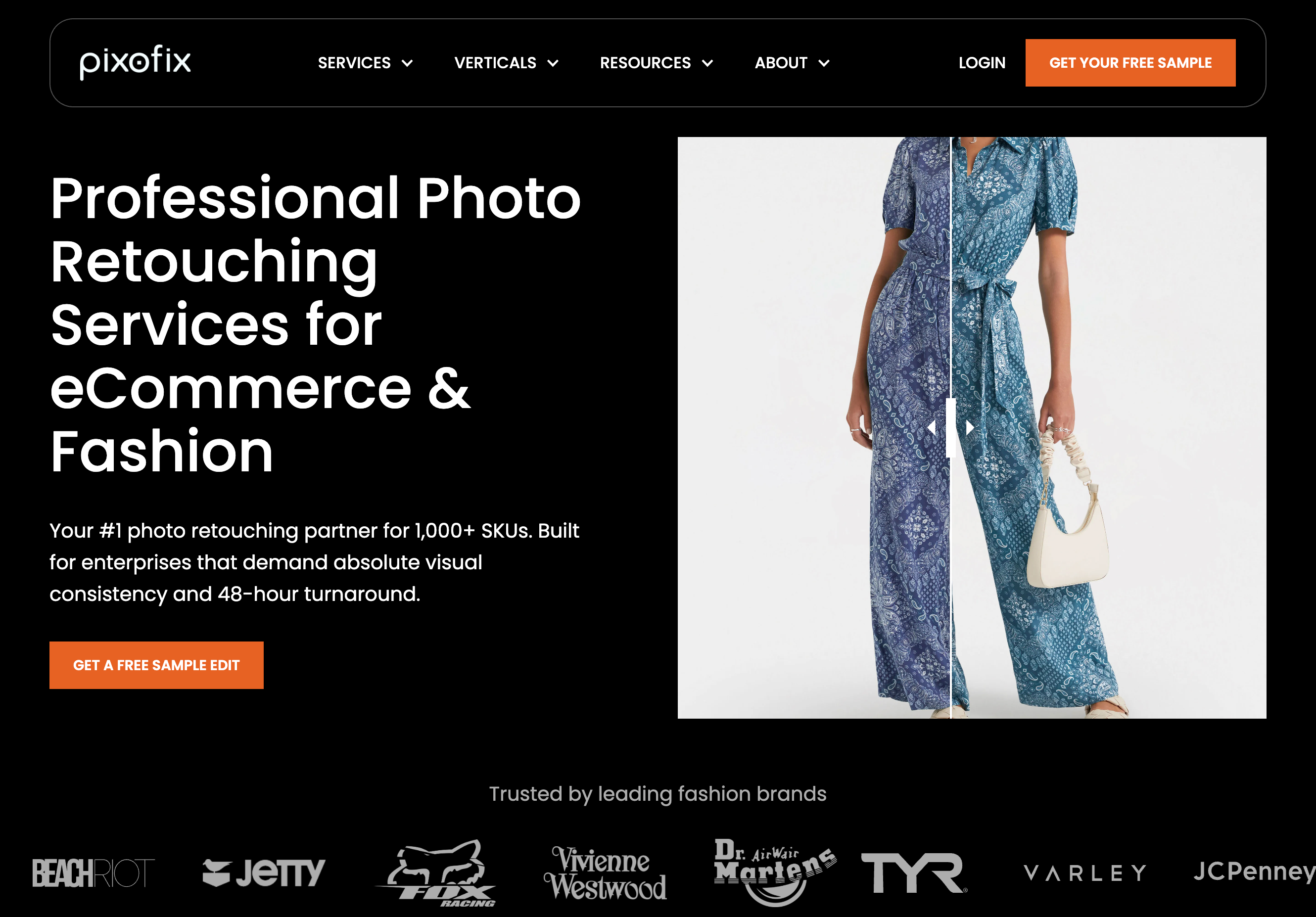
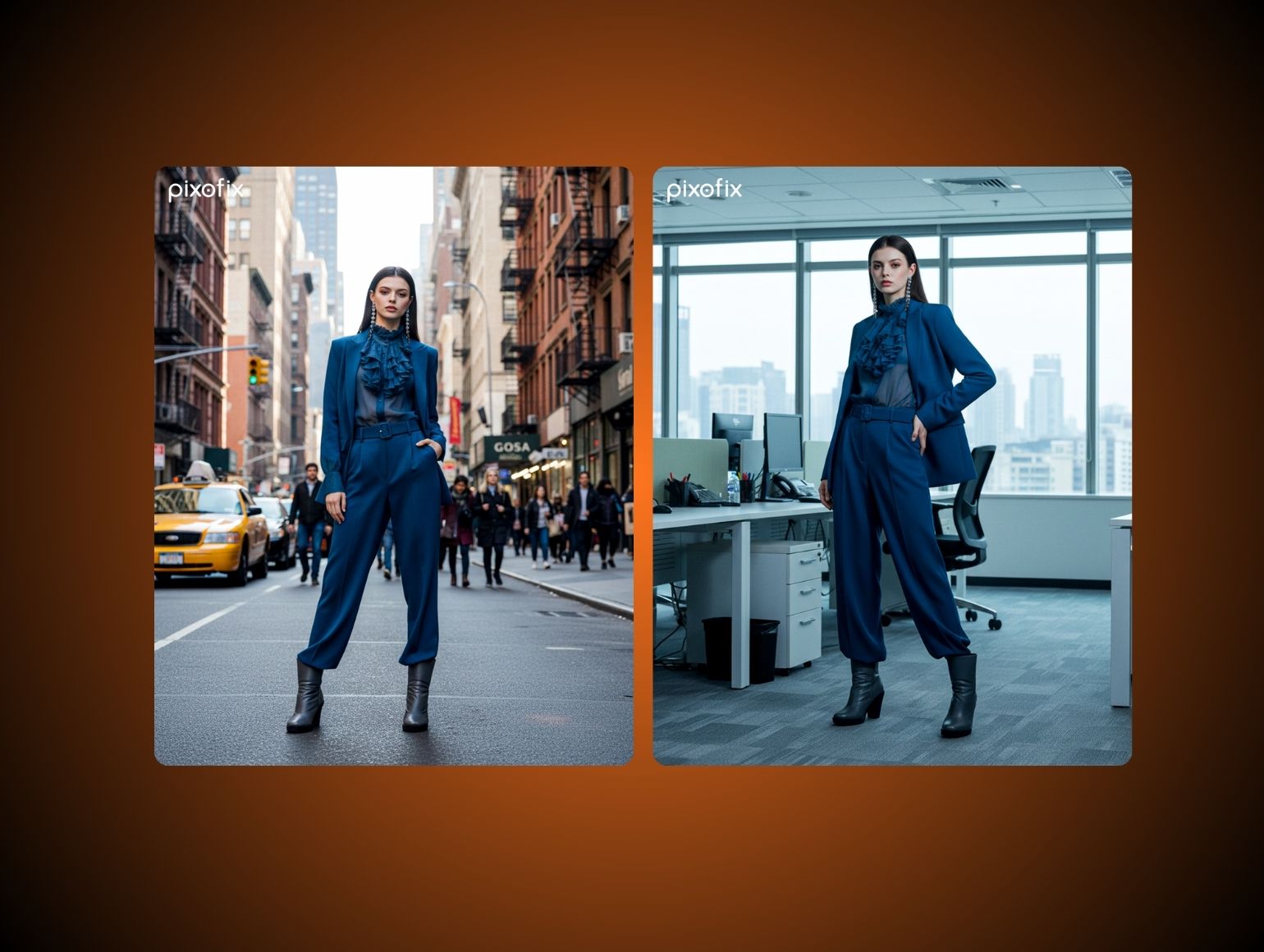
We built Pixofix around recurring, high-volume production rather than single orders. Every project goes through trained retouchers with human quality control at each stage, so batch consistency holds up whether it is 50 images or 5,000, and we back that with a 24 to 48 hour turnaround. We have processed more than 5 million images with a 98% satisfaction rate, and our client roster includes JCPenney, Fashion Nova, Varley, and BeachRiot, brands with exactly the kind of recurring SKU volume this comparison is about.
Where I would send someone elsewhere: if you are editing a handful of images a month, or you need a single one-off batch with no ongoing relationship, a pay-as-you-go model like PixelPhant's or a per-image shop is going to be simpler and cheaper than onboarding into a managed service built for volume. I would rather say that here than have someone find it out after signing up.
Best for: fashion and ecommerce brands with recurring, high-volume production who want a dedicated team rather than a self-serve queue.
2. Pixelz
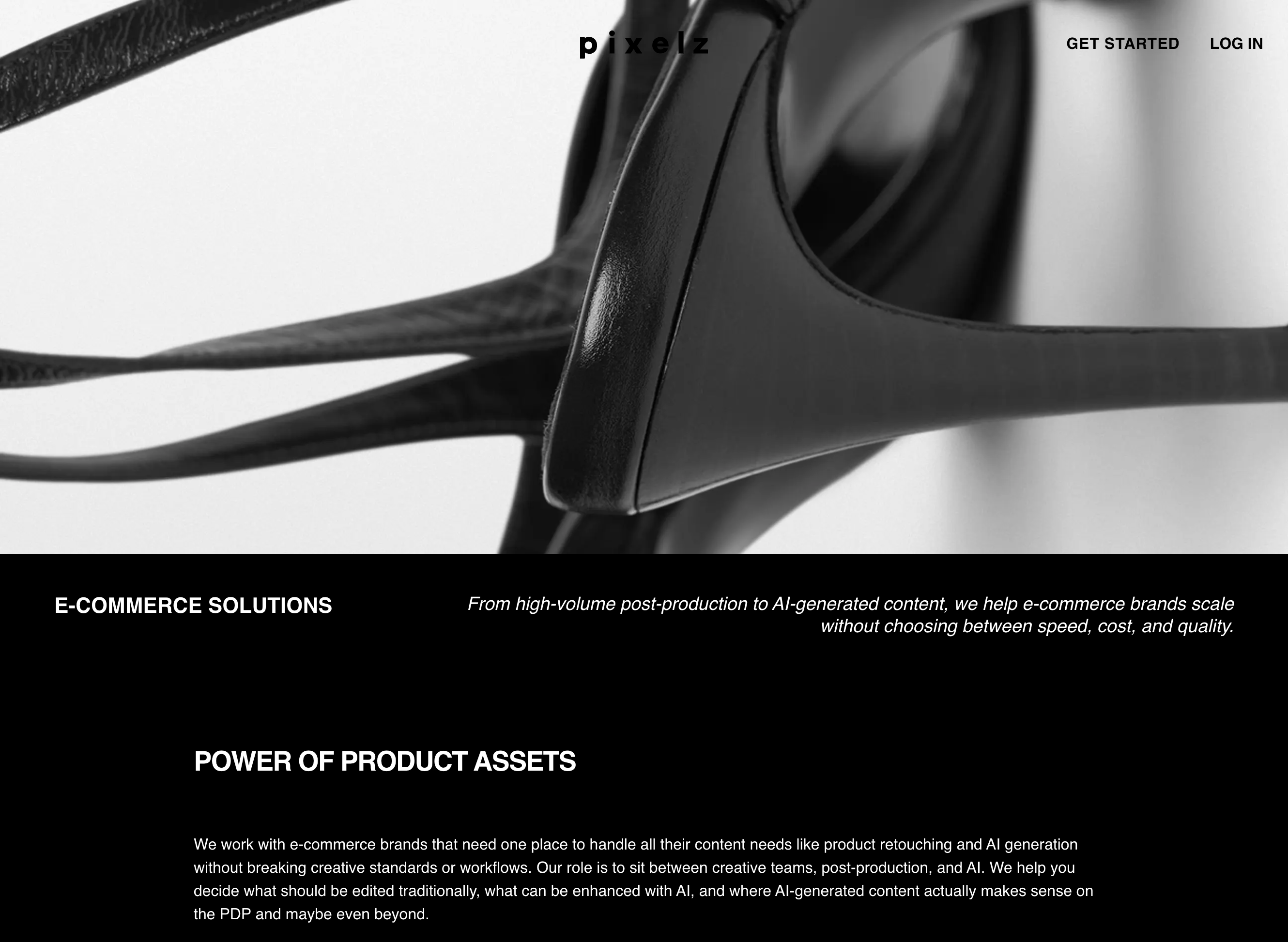
Pixelz is the closest thing to an established incumbent in this space. Their pricing puts the Professional plan at $75 a month plus $0.95 per image, with next-morning turnaround and a guaranteed 200-image daily capacity, and their platform runs on a hybrid model, AI handling the repetitive first pass, human retouchers checking and finishing the work. They report a 99.7% first-time approval rating, which is a meaningful number in this business since rejected images cost everyone time. Their client list includes Zalando, Mango, Asics, Pacsun, and Bestseller, brands that need color consistency across genuinely large catalogs.
Where I'd steer someone away: the monthly subscription plus per-image pricing means you're paying for platform access whether or not you send a full month's volume through it. If your ordering is irregular, month to month, that structure works against you compared to a pure pay-as-you-go model. It's also worth knowing upfront that Enterprise pricing jumps to $1,995 a month, a real step change from the Professional tier rather than a gradual scale.
Best for: established brands with steady, predictable monthly volume who want a platform-driven workflow with next-morning turnaround built in.
3. PathEdits
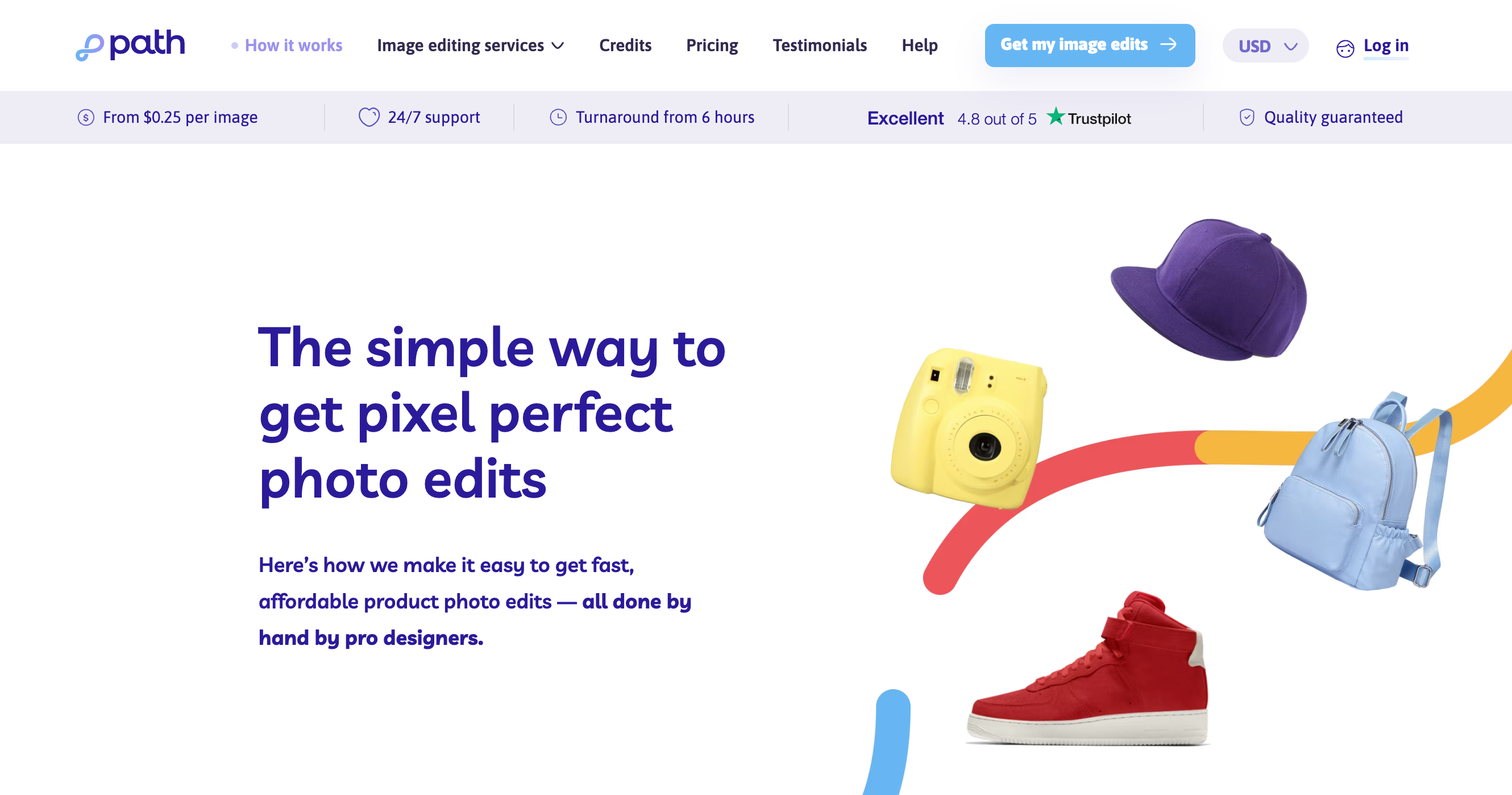
PathEdits runs a fully human-edited model, no AI in the production pipeline, which they say outright on their own site. For straightforward apparel and product edits, that shows up in the price: their apparel and fashion starts at $0.25 an image, with turnaround options at 6, 12, or 24 hours and support available 24/7. They report a team of more than 300 editors and having worked with over 40,000 businesses, and their Trustpilot rating sits at 4.7 out of 5.
The human-only positioning is a real trade-off, not just a marketing line. It likely means more consistent judgment on tricky edits, since there's no automated first pass to correct, but it also means throughput is bounded by editor headcount in a way a hybrid AI-plus-human workflow isn't. For a brand running a few hundred SKUs a season, that's rarely a bottleneck. For a brand pushing thousands of images through in a short launch window, it's worth asking directly about their capacity at that volume before committing, since it's not something their site quantifies.
Best for: apparel and fashion brands that want every edit touched by a human, without AI in the pipeline, at moderate to mid volume.
4. FixThePhoto
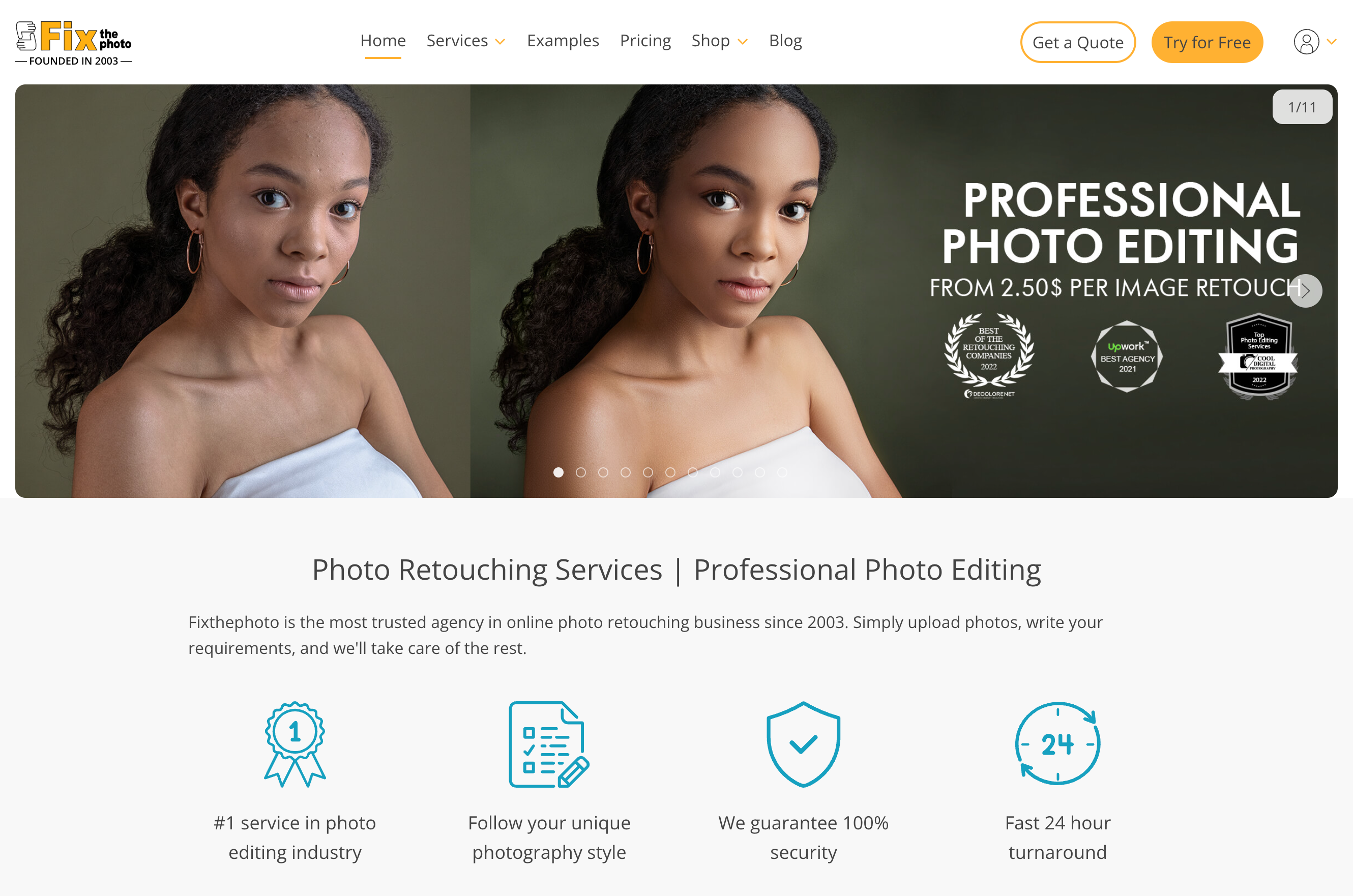
FixThePhoto's product retouching pricing gives you more tiers to choose from than most of the providers on this list. The Standard tier runs $2.50 an image with no subscription, good for up to 200 images a month on a 24 to 48 hour turnaround. Business steps down to $0.99 an image with a $49 monthly subscription, covering up to 3,000 images a month with 24 hour delivery. Enterprise drops further to $0.69 an image at $999 a month for high-volume studios. That range means a brand can start small and step up tiers as volume grows, without switching providers.
One thing worth knowing before you sign up: FixThePhoto's business is broader than pure ecommerce. Their service list includes portrait retouching, wedding photo editing, newborn photography, and real estate, alongside the product and apparel work. That's not a knock on their apparel capability, the ghost mannequin and clothing retouching services are there and priced the same as their other product work, but it does mean you're working with a generalist studio rather than a shop built exclusively around fashion and ecommerce catalogs. If you want a provider that lives and breathes apparel specifically, that's worth factoring in.
Best for: brands that want tiered, scalable pricing from a single provider as volume grows, and don't mind working with a studio that also serves other photography niches.
5. Doopic
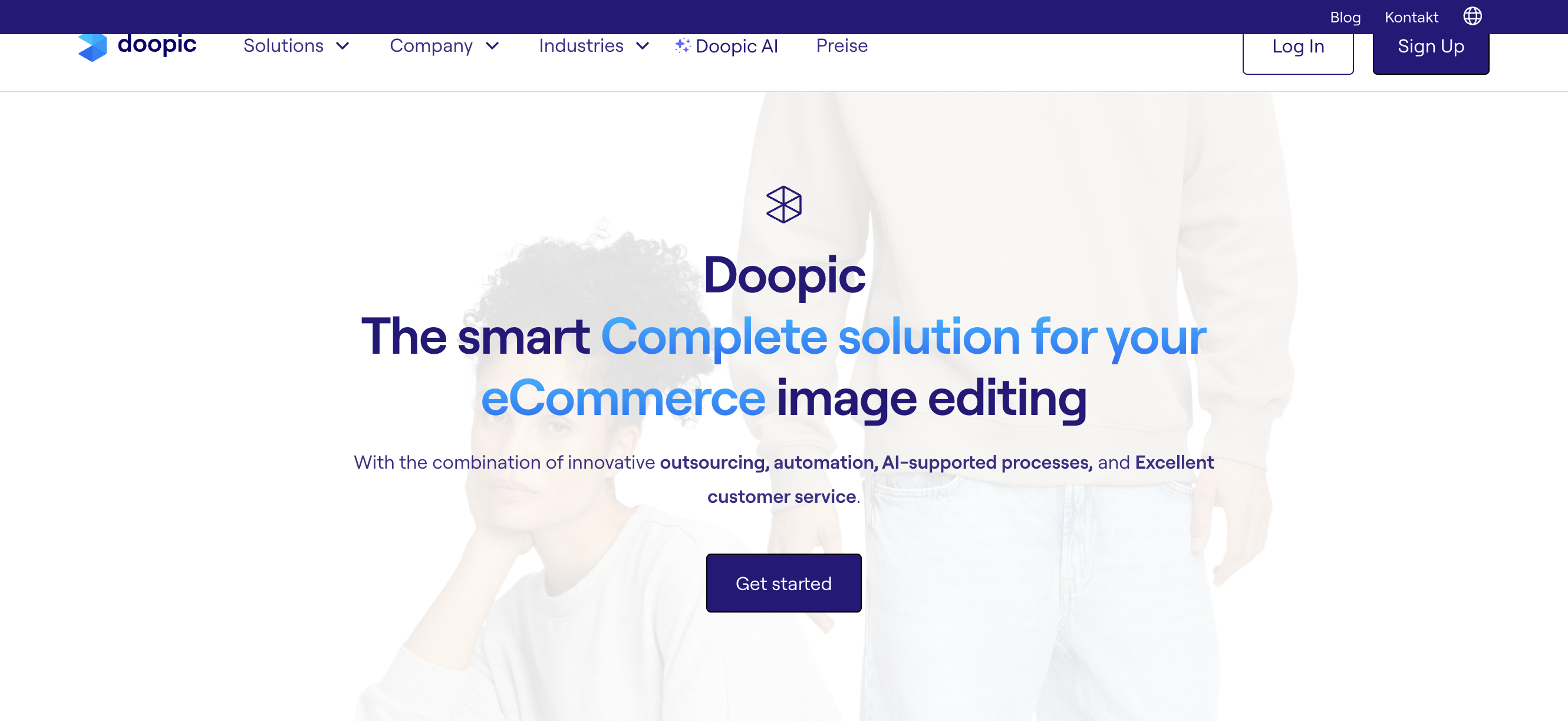
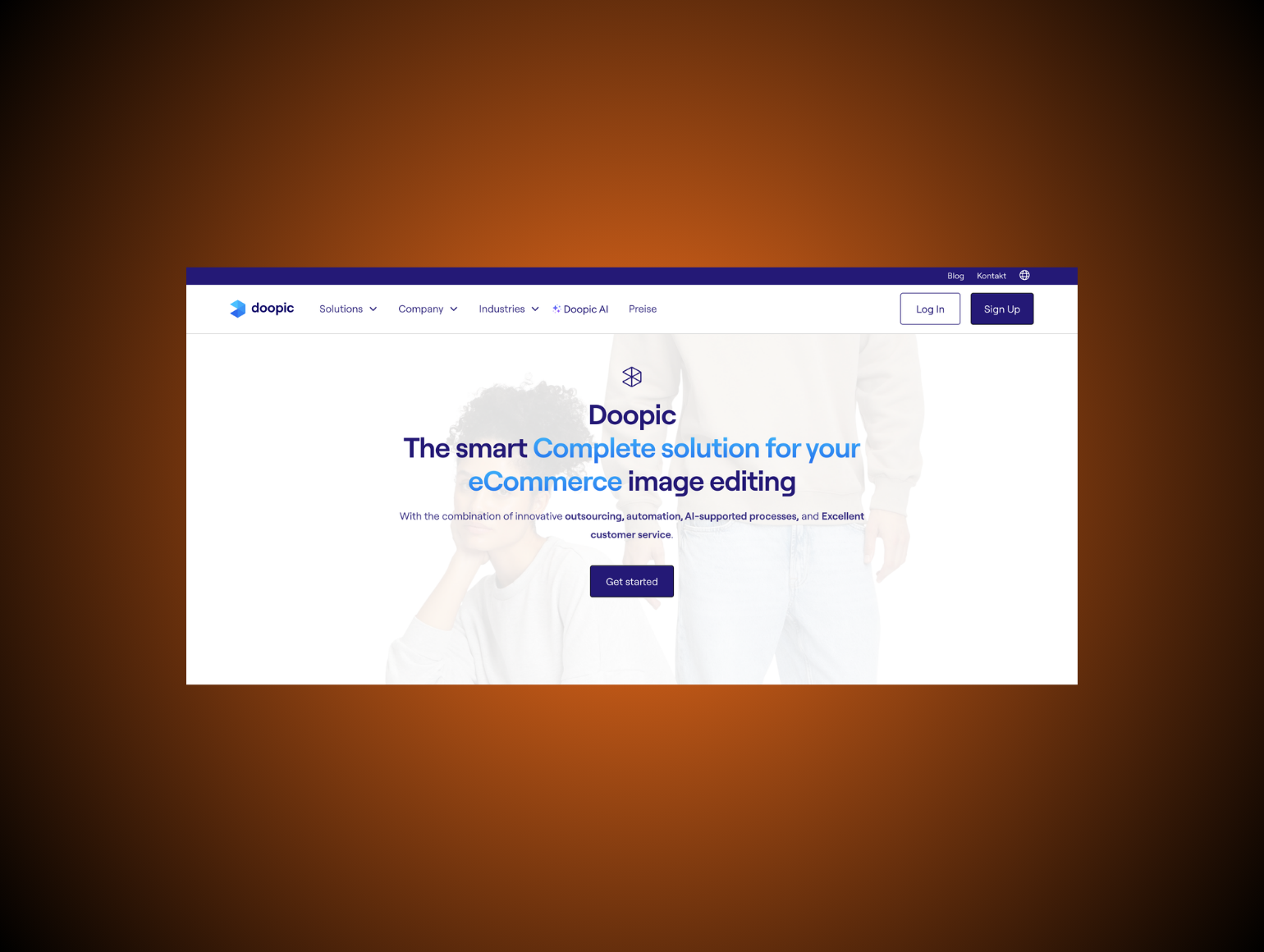
Doopic is a European ecommerce image editing platform, and that's the first thing to know before comparing its pricing directly against the other four. Their pricing quotes rates starting at €0.50 per image, with a €9.99 minimum per order, and enterprise pricing available for brands processing more than 10,000 images a year. Convert that to dollars and it lands in a similar range to PathEdits and FixThePhoto's lower tiers, but the quote itself comes in euros, worth flagging for a US-based team budgeting in USD.
What sets Doopic apart from PathEdits or FixThePhoto is scope: they don't do portraits, weddings, or general photography at all. Everything on their site is built around product and ecommerce image editing specifically, with reported experience across more than 17 industries, apparel among them but not exclusively. Their platform combines outsourced editing with some automated and AI-supported steps, positioned as a full workflow tool rather than a simple order-and-receive service, similar in spirit to how Pixelz frames its platform.
The trade-off I'd flag: because Doopic works across so many product categories rather than specializing in fashion, a brand with highly specific apparel needs, ghost mannequin work at scale, complex fabric or color-variant retouching, may find a fashion-focused provider gives more relevant expertise out of the gate, even if Doopic's base pricing looks competitive.
Best for: ecommerce brands outside fashion-only catalogs who want a dedicated product-editing platform with transparent, low minimum-order pricing.
Comparing PixelPhant and Its Alternatives
Laid out side by side, the differences between these five providers are less about who does better work and more about what kind of production relationship each one is built for.
PixelPhant's pay-as-you-go pricing and no-subscription model make it the easiest to test without commitment. Pixofix and Pixelz both build toward recurring, high-volume relationships, one through a fully managed human-QC team, the other through a hybrid AI-plus-human platform with a monthly subscription attached. PathEdits sits at the most affordable end of true human-only editing. FixThePhoto offers the widest range of pricing tiers but splits its attention across several photography niches beyond ecommerce. Doopic covers the broadest range of product categories at a transparent per-image rate, without specializing in fashion the way PathEdits or Pixofix do.
None of that tells you which one is right for a specific catalog. A brand doing 200 images a month with occasional revisions has different needs than one pushing 3,000 images through before a seasonal drop. The table below lines up the numbers so you can weigh them against your own volume and turnaround requirements.
Evaluating Features and Technology
The five alternatives split cleanly into two camps: pure human editing and AI-plus-human hybrid. That split matters more than most buyers realize when they're comparing based on price alone.
PathEdits is the only one of the five that rules out AI entirely, by design. Every edit goes through a person, start to finish. FixThePhoto's pricing tiers are also built around human editors, though their operation spans far more than ecommerce. PixelPhant, Pixelz, and Pixofix all run hybrid workflows: AI handles the repetitive first pass, background isolation, basic color correction, batch culling, and a human reviews or finishes what AI can't yet do reliably. Doopic sits closer to that hybrid camp too, with automated steps built into its platform alongside outsourced editing.
I have a professional bias here worth naming directly: I think the hybrid model is right for most catalogs at meaningful volume, and I think it because of where AI still breaks down, not because it sounds modern. AI handles repetitive work like culling, batch color correction, background isolation, and metadata tagging reliably when the brief is narrow and the source files are clean, but texture, anatomy, reflections, and brand voice are where it still struggles. A pure-AI pass on a jewelry catalog or a fabric-heavy apparel shoot will misjudge exactly the details a shopper zooms in on. That's the argument for keeping a human checkpoint in the loop rather than removing it, and it's also the argument against a purely manual workflow at very high volume, since a person checking every pixel of every image doesn't scale the same way a structured AI-plus-QA pipeline does.
None of this makes hybrid automatically better for every brand. If your volume is genuinely low, a handful of SKUs a month, the overhead of a hybrid platform's subscription or minimum order doesn't buy you much over a straightforward human-only shop like PathEdits. Where hybrid pays off is at the point where consistency across hundreds or thousands of images starts to matter more than any single image looking perfect.
Making the Switch from PixelPhant
Switching providers rarely fails because the new vendor can't do the work. It fails because the handoff is loose: no clear style guide, no pilot batch, no defined checkpoint before committing full volume. That's true whether you're moving to Pixofix or to any of the other four.
A few things worth doing regardless of which provider you pick:
- Pull your existing specs first. If PixelPhant has been working from a style guide, color profile, or set of brand standards, get that documented before you approach a new provider. Starting from "here's what we've been doing" is faster than starting from scratch.
- Run a small pilot batch before moving full volume. Ten to twenty images, not two thousand. This is where you find out whether a provider actually reads instructions and matches style, not just whether they can technically execute an edit.
- Overlap providers during the transition, if your workflow allows it. Running a launch or seasonal drop through your new provider while PixelPhant still handles the rest gives you a real comparison without betting a full catalog on an untested relationship.
- Confirm the practical logistics up front: file delivery format, revision policy, and who your point of contact is once you're past the pilot stage. These are the details that cause friction three weeks in, not on day one.
I'd add one more thing that has less to do with the new vendor and more to do with your own team: write the brief down. Loose email notes and a handful of sample images are the most common reason revision cycles balloon once volume actually ramps up, regardless of which provider is on the other end.
Finding the Right Fit
There's no single right answer here, and I'd be skeptical of any comparison that lands on one. What I'd actually do is match the decision to the two things that matter most: your volume and how specialized you need the provider to be.
If you're testing the waters or your volume is genuinely low, PixelPhant's pay-as-you-go model is still a reasonable place to start, that's not a knock on it, it's just not who this comparison was written to replace. If you want every image touched by a person and nothing automated in the pipeline, PathEdits is the clearest choice at that price point. If you want a platform with a track record at scale and don't mind a monthly subscription, Pixelz has the infrastructure for it. If your catalog spans more than fashion and you want transparent per-image pricing without a specialist markup, Doopic is worth a look. If you want tiered pricing that grows with you from a single provider, FixThePhoto covers that range, as long as you're comfortable with a studio that also serves other photography niches.
And if you're running recurring, high-volume production in fashion or ecommerce specifically, needing consistency across hundreds or thousands of SKUs without managing the process yourself, that's the exact use case I built Pixofix around. I'm not going to pretend that's a neutral sentence. It's also not going to be true for a brand editing forty images a month.
The pilot batch is still the right next step no matter which name on this list you're leaning toward. Everything in this comparison came from public pricing pages and published specs. What actually happens when a provider touches your images, on your products, under your brand guidelines, is the one thing no comparison article can tell you.


.png)
.png)
