.png)


Top WeShop AI Alternatives for E-Commerce Success (2027)
Understanding the Limitations of WeShop AI
WeShop AI markets itself as a fast, model-rich way to generate on-model and lifestyle product imagery: upload a product shot, pick from a wide library of AI models including GPT Image 2, Kling 3.0, and Sora 2, and get finished visuals back through a credit-based dashboard or API. The range of models is a genuine strength. One Shopify App Store reviewer put it plainly, WeShop AI has "the largest selection of AI models" among the tools they compared, and the app holds a 4.7 out of 5 rating across 37 reviews there as of this check.
The pricing structure is where the tool starts to reveal its ceiling. The free trial gives you 200 points and access to a limited model set. The Pro plan runs $9.99 a month for 12,000 points a year, reasonable for testing. Full API access, the feature a growing brand actually needs to plug WeShop into a real production workflow, only unlocks on the Enterprise plan at $457 a month. That's not a criticism unique to WeShop, most credit-based tools gate their most useful features behind their top tier, but it means the advertised entry price describes a much smaller operation than the one that eventually needs the tool most.
Reviewers who've used WeShop day to day flag real limitations underneath the model selection: AI-rendered fingers and toes that need correction, background inconsistency when the same product is generated across multiple poses, and credits charged even when a generation comes back wrong. Support is email-only, and there's no way to edit a generated image directly from the connected store without re-uploading it. None of that makes WeShop a bad tool. It makes it a tool your team operates, generates from, and reviews, which is a different job than the one a growing catalog eventually needs done.
What to Look for in a WeShop AI Alternative
Four things actually decide whether an alternative fits, and each one below sits in a different place on all four.
Volume is the first, and WeShop's own Enterprise pricing already puts a number on it: $457 a month once you need full API access. Below a certain SKU count, a credit-based tool works fine. Past it, the real constraint isn't image quality, it's whether someone gets through the whole catalog on schedule. I've written before about what it actually takes to scale product photography with AI from a handful of SKUs to 10,000, and volume is where self-serve tools quietly stop being self-serve.
Human oversight is the second. Every tool in this comparison, WeShop included, produces images that need a review pass, texture artifacts, a background that shifts between poses, a pose that reads slightly wrong. The question is who catches it. A DIY tool puts that job on your team. A managed service puts it on someone else's.
Integration effort is the third. Some of the tools below are apps you sign into directly and connect to Shopify in a few clicks. Others assume API work if you want them inside an existing catalog workflow rather than a separate dashboard.
Cost structure closes it out. Credit-based pricing scales with output, and it's easy to underestimate until you map your actual monthly image count against the real per-image cost, the way the WeShop breakdown above does. Our look at what outsourcing versus in-house retouching costs at 10,000 SKUs walks through that math for teams weighing a managed option instead of another subscription.
The Best WeShop AI Alternatives
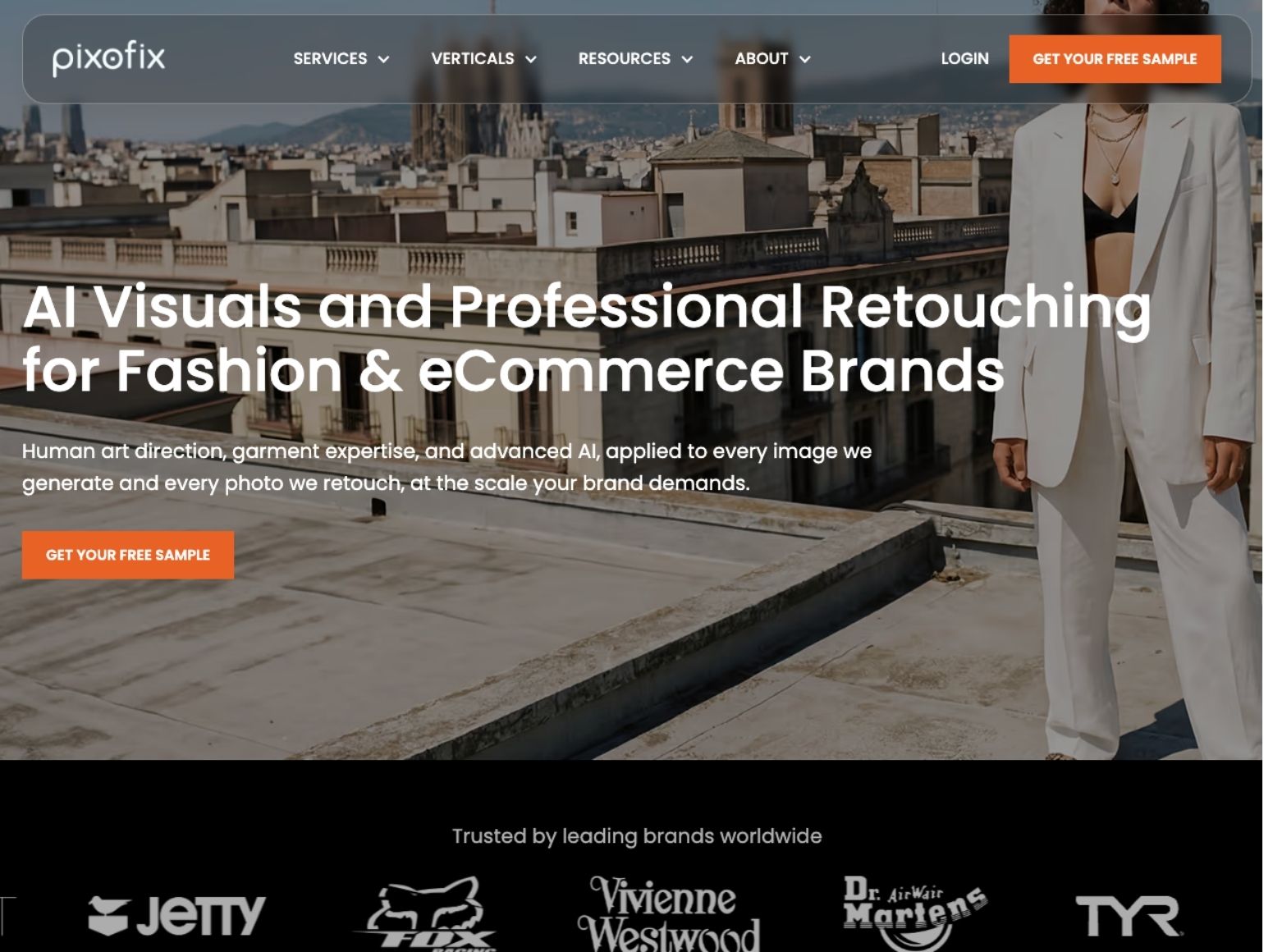
1. Pixofix
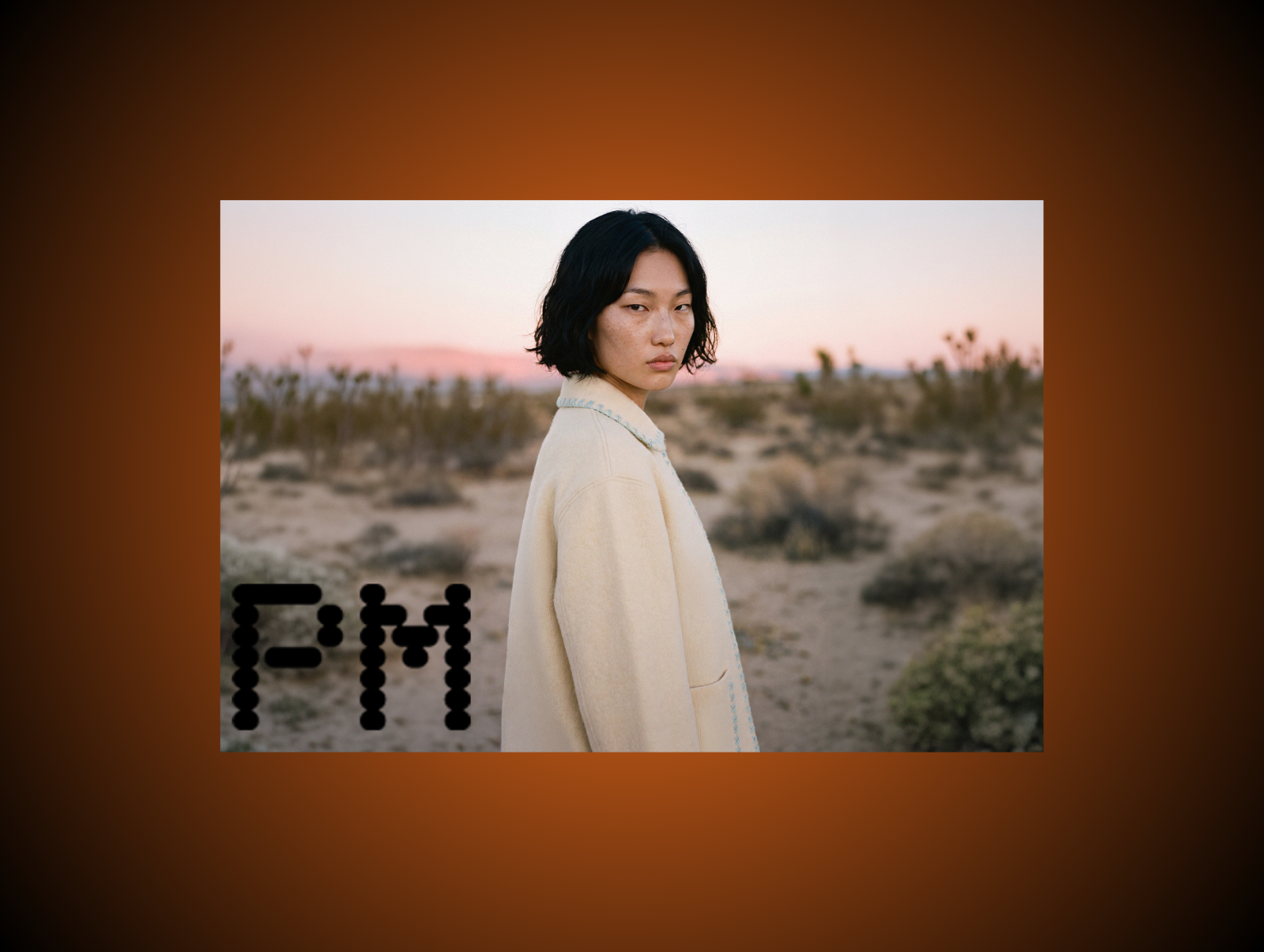
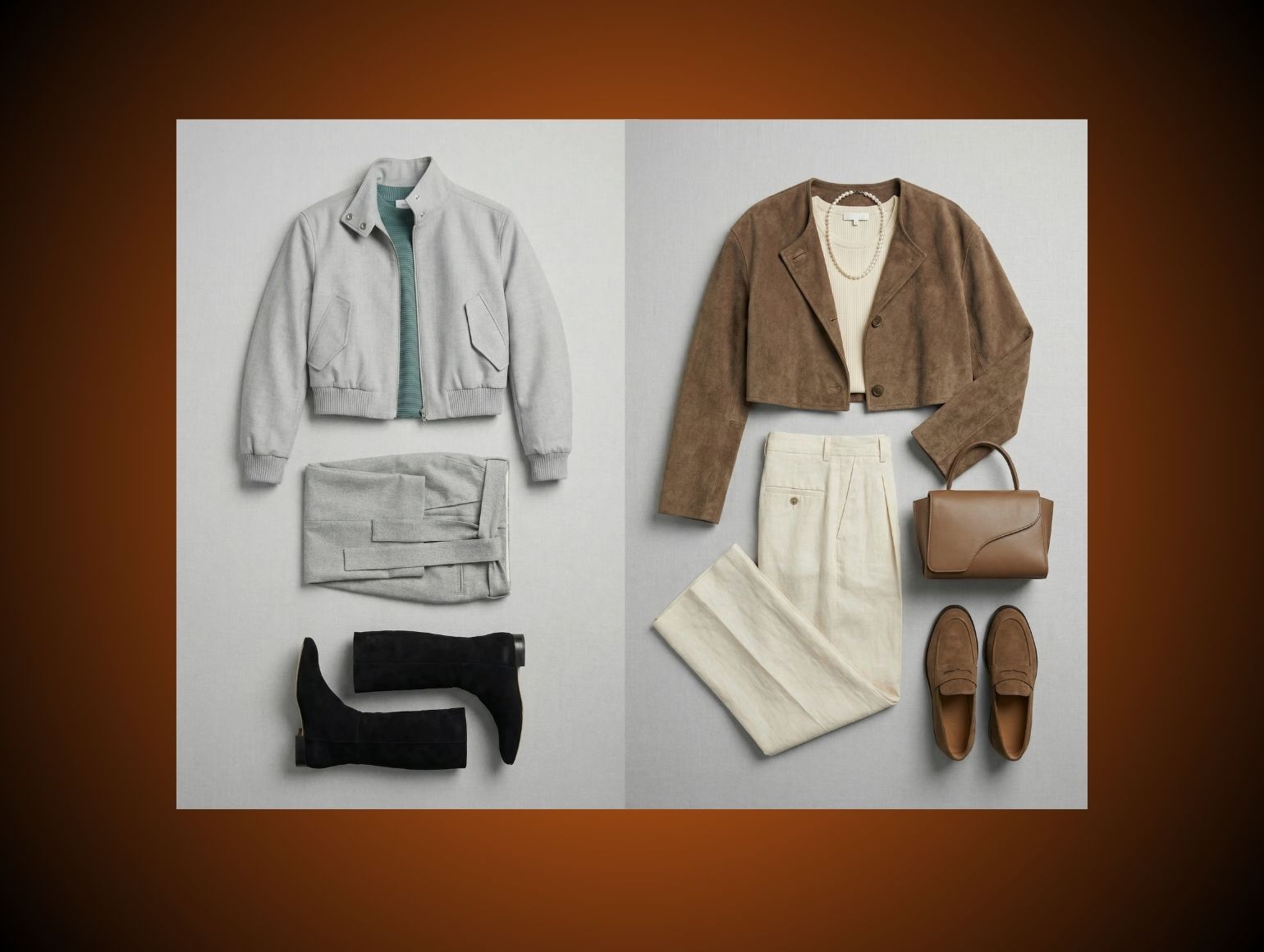
Pixofix isn't a WeShop competitor in the software sense. We don't sell a credit-based tool for your team to operate. You send us your product photos and creative direction, and we return finished, brand-consistent visuals, using an AI and human hybrid process rather than an unsupervised model.
That distinction matters most at the exact point where WeShop's own pricing starts to strain: once a catalog runs past what a Pro plan's credits can cover, and every generated image still needs a human check before it ships. We built our process to skip that handoff. I've spent eight years working in fashion, and every project we run pairs AI artists, AI engineers, and garment experts, with AI plus human QC on every single visual before delivery, not an automated output you then have to review yourself. For Fashion Nova, that structure means our team processes over 25,000 images a month with a 12-hour average turnaround, output that would take a self-serve tool's credit allowance, and someone's working hours, to review at that scale.
We also work as a pure production partner. If your creative direction is already set, whether that's a brand's own art direction or a concept from another agency, and what you need is AI visual output at volume with consistency between images, that's the part of the process we take on regardless of catalog size. If you're still testing whether AI-generated imagery works for your product at all, a handful of SKUs on a self-serve app is the more appropriate starting point. If you already know it works and the problem is doing it consistently across a real catalog, that's what our photo retouching service is built around.
Best for: fashion and e-commerce brands with high-volume, consistency-critical catalogs who want finished, QC'd AI visuals delivered as a product, not another dashboard to generate from and review themselves.
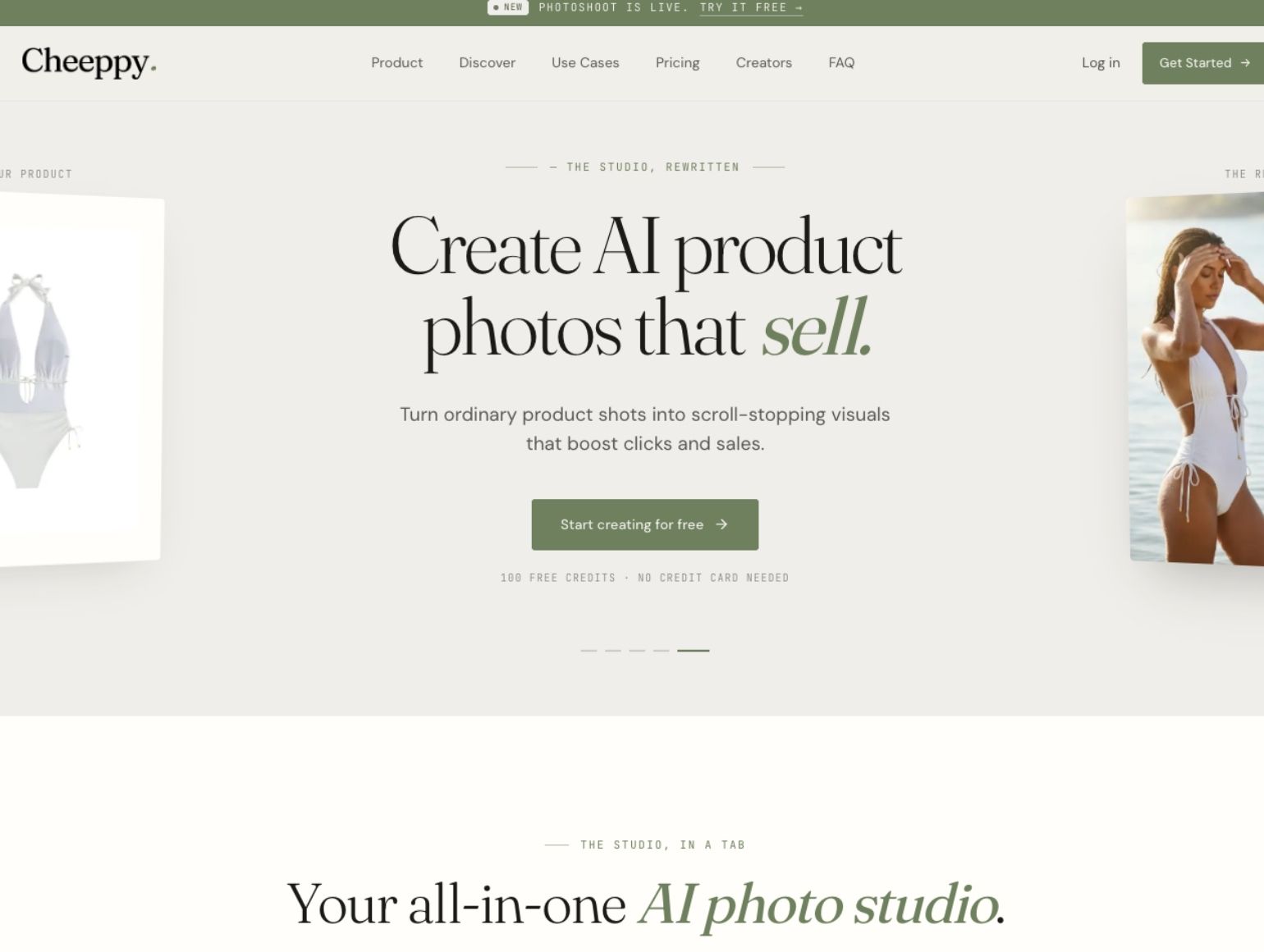
2. Cheeppy
Cheeppy is a self-serve app built for sellers replacing studio photography across a broad range of categories, fashion, jewelry, electronics, food, cosmetics, and more, not just apparel. It generates 4K images from a single product photo without prompt engineering, and it pushes finished visuals directly into a connected Shopify store. Pricing is credit-based, starting at $20 a month for 625 credits on the Starter plan, up to a custom Business tier for higher-volume sellers.
That category breadth is the actual differentiator from WeShop, which leans specifically into fashion and lifestyle imagery. If your catalog spans multiple product types and you want one dashboard covering all of them, that's Cheeppy's case to make. Like most tools in this comparison, the review pass on generated images is still the merchant's job.
Best for: small to mid-sized sellers with catalogs spanning multiple product categories who want a self-serve tool with built-in Shopify publishing.
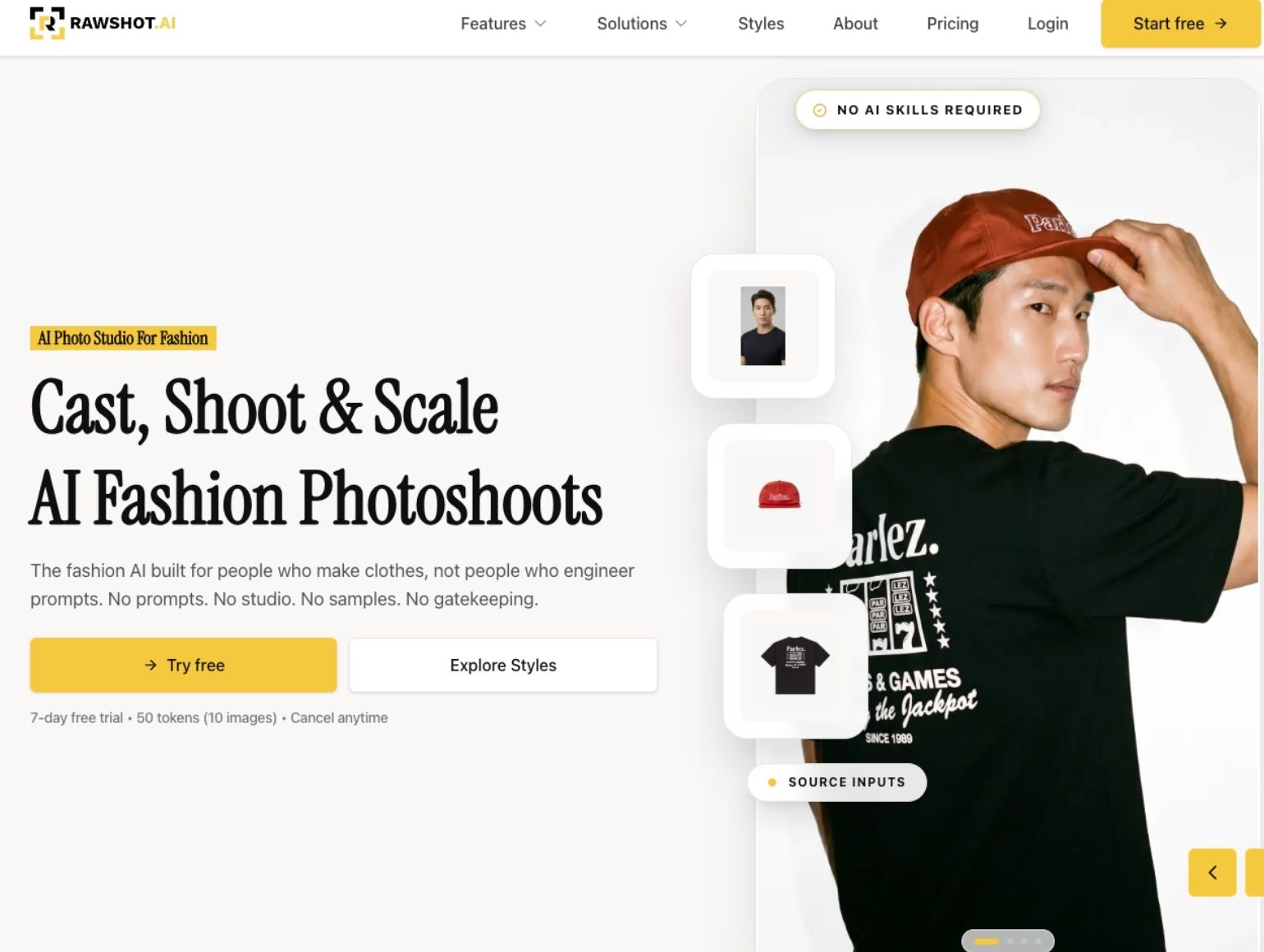
3. Rawshot AI
Rawshot is fashion-specific in a way Cheeppy isn't, built around on-model photography and video with 600-plus synthetic models, 150-plus camera styles, and 1,500-plus background templates available on every plan. Its click-driven controls are aimed explicitly at people who "make clothes, not people who engineer prompts," and it connects to Shopify, BigCommerce, Amazon, Etsy, Depop, Vinted, and Poshmark, with a REST API for catalog automation. Pricing runs token-based from $9 a month for roughly 16 images up to $179 a month for around 400.
Rawshot positions itself across a wide range, from indie designers launching a first collection to DTC operators running 10 to 200-plus SKUs to enterprise retailers with compliance needs. The model and style variety is genuinely deep for a self-serve tool. What it doesn't include is a human QC layer between generation and publish, that review still sits with whoever's running the account.
Best for: indie and DTC fashion brands wanting fashion-specific AI photography with heavy style and model variety, without hiring a production team to run it.
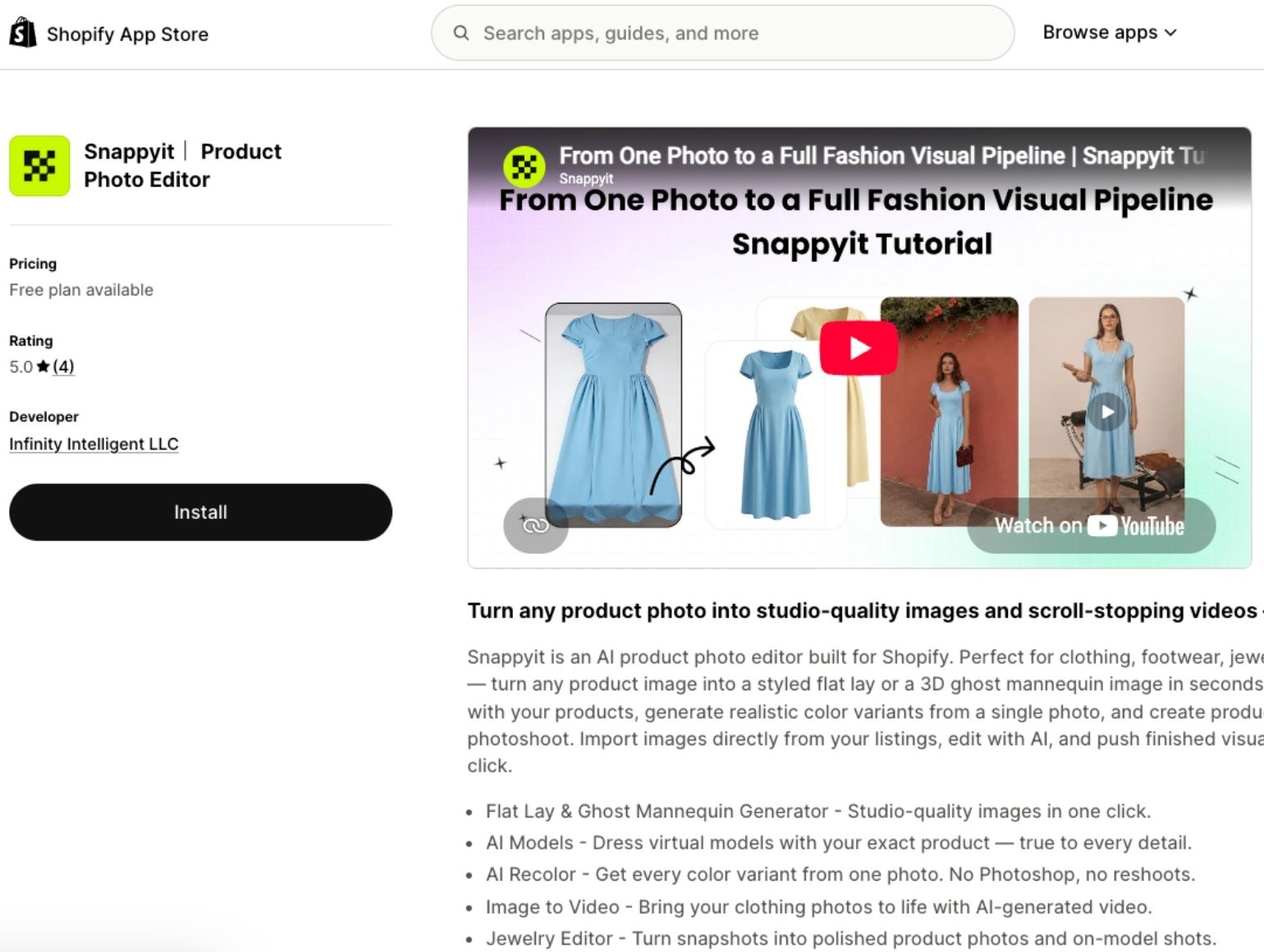
4. Snappyit
Snappyit is the broadest low-cost option here, bundling ghost mannequin generation, fashion model swaps, garment recoloring, flat-lay creation, jewelry retouching, and image-to-video inside one workspace, starting at $6.90 a week or $8.20 a month for its smallest tier. In Snappyit's own published comparison against WeShop, a fashion model generation runs about $0.62 on its Basic plan and an image-to-video clip about $1.09, both figures that check out against its general pricing page.
The tradeoff for that price point is depth. Snappyit covers more distinct tasks than WeShop or Rawshot in one app, but it's a general-purpose editing workspace rather than a tool built specifically around fashion catalog consistency, and like the others, there's no built-in review layer before publish.
Best for: budget-conscious sellers who want one low-cost app covering several photo and video editing tasks rather than a single-purpose model generator.
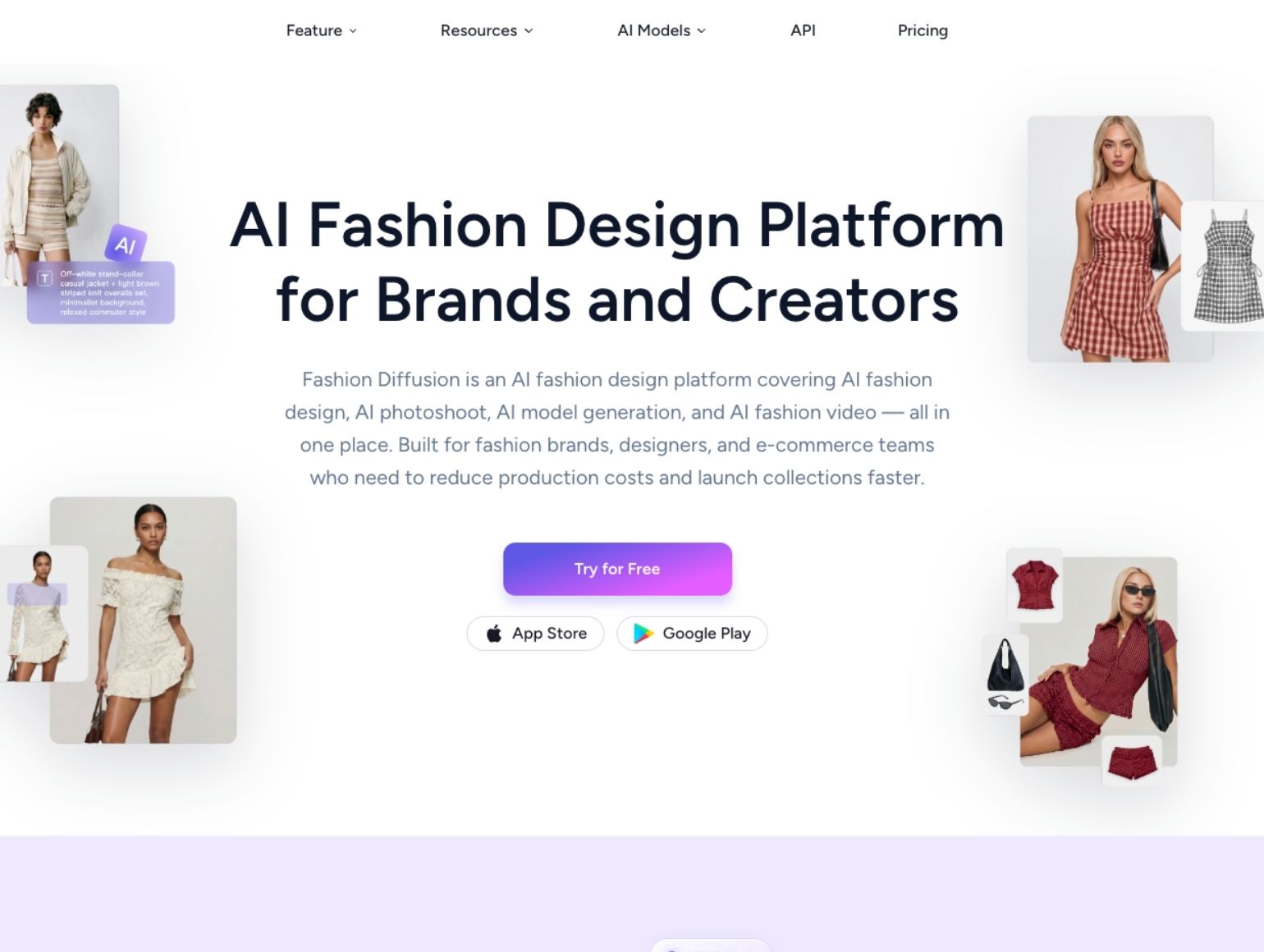
5. Fashion Diffusion
Fashion Diffusion is the most end-to-end platform in this comparison, spanning a design studio (sketch-to-render, fabric recoloring, pattern generation), a photoshoot studio for virtual try-on and flat lays, a model generator for catalog photography, and a video studio, all with API access included on every plan. Pricing runs $12 to $199 a month across four credit tiers, from 100 credits on Starter up to 2,800 on Studio.
Fashion Diffusion's own marketing claims users save three to five hours per design cycle and cut sample costs by 30 percent. Those are vendor figures without a published independent audit behind them, worth treating as a positioning claim rather than a benchmark. The platform's real differentiator is scope: it's the only tool here that starts before photography, at the design stage.
Best for: fashion brands and designers who want design-to-photography in one platform, sketch-to-render through AI models and video, rather than separate point tools for each step.
WeShop AI Alternatives at a Glance
Here's how all five compare side by side before the decision framework below.
How to Choose Based on Your Brand's Volume and Team
The table above answers what each option does. This answers which one fits the stage your brand is actually at.
If your catalog spans multiple product categories beyond fashion and you want one self-serve app with Shopify built in, Cheeppy is the broadest fit. If you're specifically a fashion or apparel brand producing 10 to 200-plus SKUs and want deep model and style variety without hiring for it, Rawshot AI's range is built for that. If cost is the deciding factor and you want one app covering several editing tasks, model swaps, ghost mannequin, image-to-video, at a low entry price, Snappyit fits, with the caveat that breadth comes at the expense of fashion-specific depth. If you want the design stage and the photography stage in one platform rather than stitching tools together, Fashion Diffusion's scope is the reason to pick it over a narrower generator, though its efficiency claims are the vendor's own and worth verifying against your team's actual workflow.
And if you've already concluded that generating and reviewing AI images yourself isn't the best use of your team's time, whether that's because nobody has hours to spare for QC at real volume, or because a growing catalog is making inconsistency between images its own cost, that's the case for a managed service like Pixofix, not another point on this feature comparison. I'd treat needing that option as a sign your catalog has outgrown self-serve tools generally, not a fallback for when the other four don't fit.
Making the Informed Choice
WeShop AI is a genuinely capable tool for generating on-model and lifestyle imagery from a single product photo, and its Free and Pro tiers are a reasonable way to test whether AI-generated visuals work for your product at all. The pricing jump to Enterprise is the honest limit, and the underlying issue, credits charged on flawed generations, background drift across poses, artifacts that need a human eye, applies in some form to every self-serve tool in this comparison, not just WeShop.
By this point you should know which of the other four fits your actual constraints: Cheeppy if your catalog spans categories beyond fashion, Rawshot AI if you want fashion-specific depth without a production team, Snappyit if cost and task breadth matter most, or Fashion Diffusion if you want design and photography in one platform.
And if the honest answer is that reviewing AI output isn't a good use of your team's time at your volume, that's not a gap another tool fills. We built Pixofix around that exact problem: eight years in fashion production, AI artists, AI engineers, and garment experts on every project, with AI plus human QC on every visual before it reaches you, whether your team supplies the creative direction and needs volume, or needs both.
Book a call with our creative team and receive a custom visual sample with your garments within 48 hours. Free, no commitment.



.png)
.png)
