.png)


Building The AI-Ready Photo Studio: A Blueprint For 2026
High output fashion studios are already hitting a hard ceiling with traditional workflows: volume rises faster than headcount while launch windows keep shrinking. Building the AI-ready photo studio for 2026 is not about chasing the latest model, it is about designing a production system where AI creation delivers speed and human perfection guarantees consistency at scale.
AI is now good enough to create on-model visuals from flats, hallucinate ghost mannequin necklines, or simulate fabric texture under studio lighting. It is not good enough to own the last 10 percent of quality that keeps a catalog visually coherent across 500 to 10,000 SKUs. That last 10 percent determines returns, brand perception, and whether your PDP grid reads as a single collection or a chaotic mood board of unrelated shoots.
This article assumes you already run a mature studio. You have lighting diagrams, Capture One sessions, color targets, FTP or DAM ingestion, and defined SLAs. The question is not whether to use AI. The question is how to rebuild your pipeline so that AI creation and human perfection sit in the right places, with QC loops enforcing consistency instead of cleaning up chaos.
AI-Ready Photo Studio Blueprint
An AI-ready photo studio is a production system, not a model choice. The blueprint combines intake, standardization, controlled creativity, and measurable QC so that you can run AI at industrial scale without watching your catalog drift over a season.
You are not rebuilding your studio from scratch. You are refactoring it so that AI touches the exact steps where it cuts time without compromising color consistency, garment fidelity, and brand styling standards. That requires starting from the operational tension, not from tooling or trend chasing.
Define Operational Tension Early
Your studio is pulled between three hard constraints. Merch wants every colorway live yesterday. Creative wants on-brand visuals that actually sell. Finance wants lower cost per image without SLA slips.
AI adds a fourth constraint. Models like Midjourney, Flux Pro, or Stable Diffusion can deliver visually impressive outputs in minutes, yet they introduce noise in color accuracy, fit representation, logos, and details like stitching or jewelry reflections. The fastest path per image often introduces downstream rework that kills ROI per SKU.
An AI-ready blueprint acknowledges this tension and does not pretend that automation alone will solve it. It uses AI as a high speed first pass, then routes high risk issues such as skin texture, shoulder lines on ghost mannequin imagery, and small construction details into human QC loops that are designed for scale. Design your workflow so that no high impact step is owned purely by a model.
Set Studio Goals For 2026
By 2026, any serious fashion or ecommerce studio will need to commit to hard, quantifiable goals, not vague AI initiatives. Examples you can adapt:
- Days from shoot or sample arrival to PDP live cut by at least 30 percent in calendar terms.
- SLA adherence above 95 percent for standard catalog batches.
- Rework rate from merchandising and brand less than 3 percent of total images.
- Color deviation across colorways controlled within tight tolerances in LAB or Delta E, aligned with how you already measure this.
These goals drive design choices. If you want two day catalog turnaround with high SLA adherence, you cannot send everything to a generative model, hope for the best, and mop up with a tiny retouch team. You need a structured hybrid system with clear gates, pre-agreed escalation points, and explicit rules for which categories accept AI variation.
Map Output To SKU Volume
The blueprint changes as you move from 500 SKUs a month to 10,000 plus. At 500 SKUs you can still hand craft a lot of decisions. At 10,000 SKUs, every exception explodes.
Start by mapping your output like this:
- Base count: SKUs per month, broken by category, for example apparel, footwear, jewelry, accessories.
- Views per SKU: front, back, detail, ghost mannequin, on-model, 360, video.
- Variants: colorways, fit variants, regional compliance crops.
- Channels: ecommerce, marketplaces, social, wholesale.
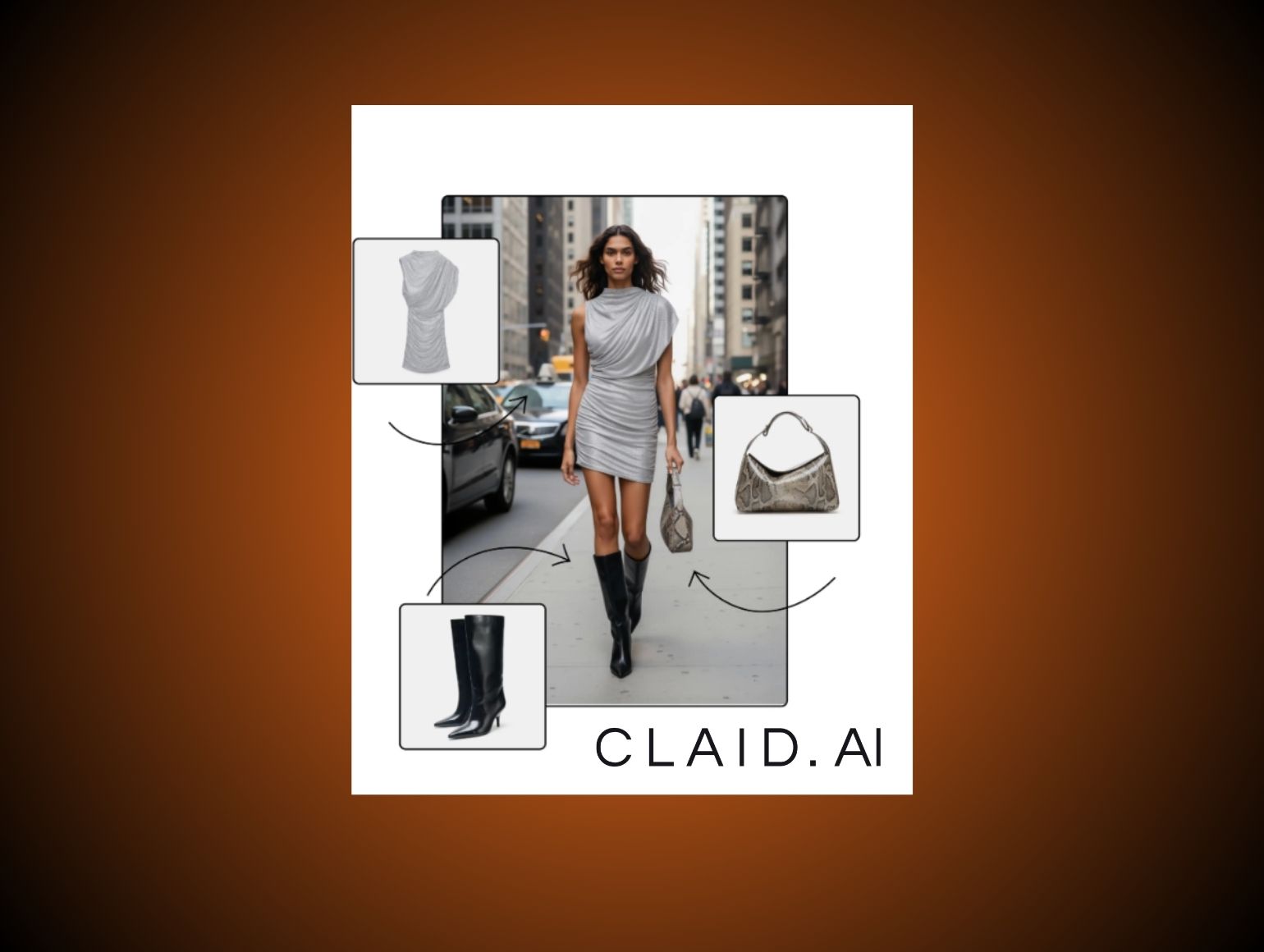
This map tells you where AI creation can replace physical capture, for example AI virtual models generated from flat-lay for on-model views, and where it should only support retouching, for example background cleanup with clipping paths and minor ghost mannequin improvements. The bigger your SKU count, the more dangerous creative improvisation becomes. The blueprint must bias toward controlled repeatability and predictable batch rules.
Why AI Breaks At Catalog Scale
One to ten images can look perfect. One thousand images reveal every weakness in your pipeline. This is where most AI-first workflows fail in production.
AI tools work well at 1 to 10 images, yet they fall apart once you push them into catalog volumes of 500 to 10,000 SKUs. The failure modes are predictable: lighting drift from batch to batch, color inconsistency across colorways, and garment distortion that only becomes obvious once you see a grid of related products. A hybrid service like Pixofix, with 200 plus retouchers across the US, EU, and Asia, exists precisely because AI speed needs human QC to be reliable at that scale.
Spot Lighting Drift Early
Lighting drift is subtle in isolation and brutal on a PLP grid. AI generated model shots, especially from tools like Flux Pro or Stable Diffusion tend to adapt global contrast and highlight rolloff based on prompt language or seed randomness. Even small prompt edits across batches result in legs that look slightly slimmer or faces that feel more contrasty.
In a human-led studio, lighting drift is contained with consistent setups and Capture One styles. In an AI workflow, you need the equivalent: fixed prompt blocks, seed control, and reference image conditioning. Add automated checks, for example histogram ranges, highlight clipping thresholds, and midtone density bands, paired with a human who views samples from each batch together.
Create a pre-publish check that compares a sample grid per batch before delivery to merch. Once you see a PLP of 200 T-shirts with four subtly different lighting styles, you have already lost. The cost to re-standardize that grid later will exceed whatever AI saved on day one.
Prevent Color Mismatch Batches
Color drift is the costliest error in fashion ecommerce because it drives returns and customer distrust. AI upscaling, generative fill in Photoshop, and tools like Imagen 3 or Runway Gen-4 often introduce saturation changes and subtle hue shifts, particularly on reds, neons, and deep blacks.
The real damage at catalog scale is not a single off image. It is a batch of 500 colorways where half trend warmer under virtual light sources while the rest stay close to your physical color target. Once that goes live, PDPs for a single named color look like three different families.
To make your studio AI-ready, every AI touchpoint must be wrapped in color management. Capture One sessions, color targets, and LAB references remain the source of truth. Any generative output must be pulled back to that reference, either through LUTs, custom Photoshop actions, or color matching scripts that your retouch team owns and approves.
Pixofix has retouched more than 5M images for fashion and ecommerce, and that volume only works because each AI-assisted asset is color checked by humans before final delivery. AI will not respect your color library unless you explicitly force it with technical standards and enforce them with trained eyes.
Reduce Garment Distortion Risks
AI struggles with structural fidelity. It tends to improve garments in ways that misrepresent reality. Textures get over-smoothed, hems get invented, and folds appear or disappear to flatter the model’s inferred anatomy. Ghost mannequin outputs are especially fragile around shoulders, armpits, and necklines.
Flat-lay to virtual model workflows are powerful, for example using AI to generate hyper realistic visuals from a single input, but they are high risk without guardrails. You will see:
- Strap lengths changing across colorways.
- Logos and prints warping around body curves.
- Pocket positions drifting between similar SKUs.
- Knit textures melting into plastic skin shine under studio-like lighting.
These distortions are not always obvious at thumbnail size, yet customers sense something wrong and question fit or build quality. Your blueprint must specify where structural integrity is checked, which might involve comparing generated outputs to flat-lay references or to a template garment per category. Human QC loops at this step are non negotiable, and reject reasons should be clearly codified for retraining.
AI-Ready Photo Studio Workflow
An AI-ready workflow is predictable. It focuses creative risk in narrow, pre-approved zones and clamps everything else. Boredom at the process level is a good sign.
Standardize Intake And References
Every AI driven pipeline starts with disciplined intake. Put structure in place:
- Use consistent naming conventions at SKU and colorway level.
- Maintain clear shot lists that identify which views will be physical versus AI generated.
- Flag high risk categories such as jewelry, metallics, patent leather, and complex prints.
Build a reference library. For each product category, define gold standard images that capture your lighting style, posing language, texture mapping expectations, and acceptable skin retouching levels. Feed those references into AI tools and use them as non negotiable benchmarks for human retouchers.
If your studio combines AI photos with traditional capture, the intake step should label which shots are AI primary and which are retouch primary. This prevents guessing later in the pipeline when deadlines are tight and different teams interpret priorities differently.
Lock Prompts, Seeds, And Style Guides
Most studios treat prompts as creative notes. That approach collapses under volume. For 2026, your prompts and negative prompts are part of your style guide, just like cropping rules or ghost mannequin templates.
Best practice:
- Create locked prompt blocks per category, for example denim, lingerie, outerwear, footwear.
- Fix seeds for base looks, especially for virtual models that appear across multiple campaigns.
- Define banned phrases that introduce color drift or stylistic noise, such as dramatic or cinematic lighting.
- Document prompt and seed changes with version numbers, tied to dates and campaign codes.
Store these prompt assets inside your studio stack, within tools like Weavy or your DAM, so your creative team is not hunting in shared docs. Treat every change to the prompt or seed as equivalent to changing lighting on set. It must be intentional, reviewed, and reversible.
Build Review Gates For QC
Your workflow needs multiple gates, not a single final review bottleneck. Typical stages:
- AI creation or automated first pass retouch.
- Technical QC, checking clipping paths, resolution, artifacting, ghost mannequin joins, hands and fingers, and texture consistency.
- Color and style QC, checking against references, posing rules, framing, and skin polish levels.
- Final delivery gate, verifying SLA adherence, file naming, and packaging for DAM or PIM ingestion.
QC loops must have clear reject reasons, for example color drift, structural distortion, incorrect fabric read, jewelry reflections with unnatural highlights, plastic skin, or broken clipping paths. Feed these reasons into training, including LoRA training tuned to your brand look or prompt templates that avoid known failure modes. Over time, your reject log becomes a design tool for improving both AI prompts and human guidelines.
Hybrid Production For AI-Ready Photo Studio Scale
If you try to automate everything, you will chase errors forever. If you refuse AI, your cost base and speed will not compete. The hybrid production model is the only sustainable play for high volume fashion studios.
Use AI For First Passes
Treat AI as a high speed junior assistant. Assign it to:
- Generating on-model views from flat-lay inputs via virtual models.
- Filling missing angles when samples are delayed or damaged.
- Cleaning backgrounds and generating clipping paths for low complexity products.
- Drafting ghost mannequin composites that a retoucher refines.
Use AI for low risk generative video from stills for social formats, while keeping core catalog imagery in a separate, higher control lane. Tools like Runway Gen-4 or Kling can work for motion, but set rules to prevent changes to perceived color or fabric character.
Apply a simple rule. If a mistake will be expensive to fix after go live, do not let AI own that step alone. Put AI upstream, with human expertise holding the final gate on anything that appears on PDP zoom or in key merchandising slots.
Use Humans For Final Consistency
Human retouchers are not there to fix whatever AI did. They are the authority on final consistency and brand protection. Their scope should include:
- Color correction back to Capture One and physical swatches.
- Skin retouching that respects ethnicity, age, and brand guidelines.
- Repairing AI artifacts such as warped jewelry, distorted hands, and awkward shoulder geometry.
- Enforcing crop, margin, and layout consistency across colorways and campaigns.
At Pixofix, more than 200 retouchers across time zones maintain 24 to 48 hour delivery SLAs for standard catalog batches because human QC is baked in as a final authority, not an optional safety net. That is how AI speed becomes dependable production rather than an uncontrolled gamble.
Keep One Visual Standard
An AI-ready studio cannot run two aesthetics, one for AI and one for camera. Your customer does not care which tool made the asset. They perceive one brand identity.
Unify across sources:
- Posing language for virtual models and physical talent.
- Shadow depth and direction for AI composites and studio captures.
- Skin texture, shine, and retouch intensity.
- Ghost mannequin angles and cropping windows.
If your AI tool cannot hit your visual standard consistently, retrain it, tune it with LoRA training specific to your brand look, or constrain its usage to lower risk slots. Do not quietly relax the standard to fit the tool. That path leads directly to catalog drift and inconsistent perception season to season.
AI-Ready Photo Studio Team Structure
Technology only works if your team structure supports it. By 2026, you will need clear ownership between creative, production, and engineering to keep AI from devolving into side experiments.
Assign Clear Production Roles
Key roles in an AI-ready studio include:
- AI operator, managing prompt systems, seeds, reference sets, and batch generation.
- Retouch lead, owning visual standards, retouching playbooks, and escalation decisions.
- QC specialist, running technical and color checks, tracking reject reasons, and updating guidelines.
- Studio engineer or technical producer, integrating tools, managing DAM flows, automations, and version control.
On smaller teams, people can wear multiple hats, but keep responsibilities explicit in your documentation. Without this, AI adoption turns into ad hoc experimentation that breaks SLA adherence and causes unpredictable output quality once volumes spike.
Create A QC Escalation Path
Not all errors are equal. Some distortions are acceptable for social teasers and quick stories, but never for PDP zoom views. Some anomalies can be batch fixed, while others require a recall.
Your QC escalation path should define:
- Which defects trigger auto reject, for example wrong color, reversed logos, missing construction details.
- Which defects can be accepted for time sensitive content, with a planned rework window.
- Who decides when to reshoot physically versus regenerate via AI.
- How frequently recurring defects get summarized and reported, and to which owner.
Log these decisions in a structured way. Over time you will see patterns, for example a specific AI tool corrupts fine jewelry reflections under certain lighting descriptions, or hands become unreliable at certain zoom levels. Those findings should influence your tool choices, prompts, and reference sets.
Train For Fashion And Ecommerce Needs
AI literacy alone is insufficient. Your team must understand fashion construction, drape behavior, and how customers read images when deciding fit and quality.
Training modules should include:
- Reading pattern lines and seams so garment distortion is obvious.
- Understanding how different fabrics respond to light, for example silk versus denim versus patent materials.
- Recognizing acceptable versus misleading retouching, for example erasing folds that indicate real fit tension.
- Category specific issues such as toe shape distortion in footwear or clasp inaccuracies in jewelry.
A retoucher who knows how a tailored blazer is built will catch AI errors instantly. Without that domain knowledge, AI artifacts slide through QC and only surface later as higher return rates and negative feedback.
AI-Ready Photo Studio Stack Design
Your tooling is secondary to your workflow design, but you still need a coherent stack. Fragmented tools create post-production bottlenecks and version chaos.
Choose Tools By Workflow Stage
Think in stages, not vendors, and assign tools explicitly:
- Capture: Capture One, tethering tools, and color calibration hardware.
- AI creation: Midjourney, Flux Pro, Stable Diffusion, Imagen 3, or in-house models for virtual models and on-model creation.
- Retouching: Photoshop for detailed work, batch actions, and fine texture control.
- Video and motion: Runway Gen-4, Kling, and similar tools for generative video based on approved stills.
- Collaboration: Weavy or equivalent for comments, approvals, and audit trails.
Decide which tool owns each step, and write this into your production playbook. Do not let AI operators improvise tooling per batch. Tool drift becomes as damaging as lighting drift when you are pushing thousands of images per month.
Connect Retouching And Asset Delivery
Your retouch and QC environment must connect directly to your DAM, PIM, or commerce platform. Broken handoffs cost days and introduce errors.
Key questions to answer:
- Are retouchers working from a centralized DAM where version history is preserved.
- Do AI generated variants get tagged as such for traceability and risk analysis.
- Can merchandisers see QC status without emailing for updates.
- Is metadata such as SKU, colorway, and view type preserved through the pipeline and visible downstream.
Pixofix supports brands that ship between 500 and 10,000 plus SKUs per month, and that only works because retouching and asset delivery are wired tightly. When models are regenerating assets on one side and merch is staging PDPs on the other, every manual file move is a risk you can design out.
Plan For Version Control
AI increases version volume dramatically. One garment might have dozens of AI iterations before final. Without version control, the wrong variant goes live and nobody can reconstruct why.
Set rules such as:
- One canonical filename schema keyed to SKU, colorway, view, and version.
- Hard limits on stored AI drafts, with a clear mark for approved for retouch.
- Visual diff tooling or at least side by side review for critical products.
- Retoucher signoff recorded per asset batch, with timestamps and owner names.
If you use Weavy or similar tools, embed comments and approvals at the asset level. Treat image versions like code versions. You should always know which version shipped, who approved it, which AI tool touched it, and which prompts or LoRA models were in play.
Metrics For AI-Ready Photo Studio Performance
AI hype means nothing without hard numbers. By 2026, your AI-ready studio must treat measurable performance as a core asset, not a side report.
Track Turnaround Time
Time to live should be measured from sample arrival or file ingest, not from retouch start. Break it into separate intervals:
- Capture or source prep time.
- AI generation or automated retouch time.
- Human retouch and QC time.
- Packaging and delivery time to ecommerce or DAM.
Target values help. For standard catalog SKUs, 24 to 48 hours total is realistic if your pipeline is tight. Pixofix routinely delivers full catalog batches in that range, which sets a reference for what an optimized hybrid model can achieve. If your timeline is weeks, AI is probably adding chaos, context switching, and rework instead of cutting time.
Measure Rework And Reject Rates
Your AI-ready blueprint lives or dies on how much rework it generates. Track separately:
- Internal reject rate during QC, by batch and by category.
- Merchandising or brand team reject rate post delivery.
- Rework source, for example AI artifact, poor prompt, human retouch error, spec change, or missing reference.
An acceptable target is under 3 percent external rework for standard SKUs. If AI driven batches are consistently higher, then prompts, LoRA training sets, or QC gates are misconfigured. Do not simply add more retouchers to compensate. Fix the upstream design, then confirm changes with metrics.
Monitor Color And Output Consistency
Color and consistency metrics can be precise and automated. Examples include:
- Delta E averages for key color families against swatch targets by category.
- Histogram and luminance range checks for standard views to catch exposure drift.
- Shadow depth and angle variance across category grids.
Even simple automated checks, like flagging images whose global saturation deviates beyond a defined threshold from category norms, can catch AI drift early. Then a human makes the final call based on context. Automation should point at potential issues. People decide what actually needs correction.
Scaling AI-Ready Photo Studio Output From 500 To 10,000 SKUs
Scaling your AI-ready studio is not about turning a volume dial. It is about making the system predictable enough that more volume does not break it.
Use Batch Rules For Repeatability
Batch rules define how you treat groups of SKUs in a consistent way. For example:
- All T-shirt flats in basic colors, use AI ghost mannequin with human QC focused on neckline and shoulder joins.
- All premium jackets, shoot physical on-model hero images, then use AI virtual models for secondary stylized views, with strict structural QC and clear reject thresholds.
- All jewelry, capture physically and retouch manually, with AI used only for background cleanup, not for reflections or stone detail.
Write these rules into your production playbook. When new products arrive, production assigns them to a batch rule, not to whoever has time that week. This keeps AI application consistent and SLA adherence predictable from season to season.
Protect Peak Season Throughput
Peak season is when AI is both most tempting and most dangerous. Volume spikes, samples are late, and merch wants everything online immediately.
Your peak blueprint should include:
- Predefined fallback modes when SLA is at risk, for example auto approving lower priority assets with lighter QC or postponing secondary views.
- Clear exclusions, for example prohibiting AI only workflows for new hero categories during launch weeks.
- Capacity buffers in your retouch team to absorb unexpected AI failures or retraining needs.
A distributed retouch team like the one at Pixofix, which has already processed more than 5M images globally, illustrates why geographic spread matters. When one region hits capacity, another can take over without breaking SLAs or QC standards, keeping peak output stable while maintaining consistency.
Align Capacity With Launch Calendars
Finally, align your capacity model with your merchandising calendar. AI does not eliminate the need for planning, it simply changes the constraints.
You should know:
- Monthly SKU forecasts by category and view type.
- Tooling capacity, for example how many AI jobs your stack can run in parallel without degradation.
- Human capacity, including senior retoucher bandwidth for complex or high risk categories.
Once these are clear, you can make conscious tradeoffs. Decide which parts of the line will benefit most from AI assisted virtual models, which will stay traditional capture, and where to push experimental formats such as generative video. The AI-ready studio chooses where speed matters most and where perfection is non negotiable, and then defends those choices when pressure rises.
Common Mistakes To Avoid
This section uses a simple pattern for clarity.
Over-Automating Critical Retouching
Mistake: Letting AI do all skin, fabric, and structural corrections on key categories.
Consequence: Plastic skin, over-smoothed textures, warped seams, and subtle distortions that customers interpret as low quality manufacturing.
Fix: Define hard limits for AI usage per category. For premium apparel, keep final skin work and garment detailing in human hands, with AI limited to background cleanup and non structural changes.
Skipping Reference Discipline
Mistake: Generating AI model shots or composites without strict reference images and style guides.
Consequence: Batches where one colorway looks studio lit, another looks outdoor, and a third uses different posing language. Catalogs feel disjointed and off brand.
Fix: Build a maintained reference library with category specific gold standards. Make those mandatory inputs for AI operators and retouchers, and reject any batch that does not visually align with references.
Treating Every Shoot Like A One-Off
Mistake: Allowing per shoot or per campaign improvisation in prompts, lighting styles, and retouching intensity.
Consequence: Production cannot predict timing, QC loops grow, and SLA adherence drops once you pass 500 SKUs per month.
Fix: Codify reusable playbooks. For each recurring product category, define lighting, AI prompts, ghost mannequin rules, and retouching depth. Deviation from the playbook should be an explicit, documented decision.
Pixofix For AI-Ready Photo Studio Production
An AI-ready studio does not have to build every capability in house. Hybrid services can handle the production grind while you focus on creative direction and merchandising, especially once catalog volumes escalate.
Pixofix combines AI production speed with human QC at scale, using more than 200 retouchers across US, EU, and Asia to cover global time zones. This blend turns fast AI-first passes into dependable, on-brand catalog assets that hold together across collections and channels.
Pixofix has already retouched over 5M images for fashion and ecommerce brands while maintaining a 24 to 48 hour delivery SLA for standard catalog work. That experience spans clients shipping 500 to 10,000 plus SKUs per month, so the team understands how AI tools break at scale and how to plug those gaps with process, QC loops, and category specific expertise.



.png)
.png)
