.png)

5 Best Neural Fashion Alternatives for AI Fashion Visuals (2027)
Why Brands Look Beyond Neural Fashion
Neural Fashion describes itself as the first AI-first creative agency built exclusively for fashion, running on a proprietary AI platform with an in-house team of specialists rather than a self-serve tool a brand operates on its own. Brands including Pronovias, Desigual, and Sepiia have used it for campaign visuals, and the appeal is straightforward: production speed and creative range without a traditional photoshoot.
That specialization is also where the limits show up. An agency built around one proprietary platform gives a brand exactly one way of working, and if that approach does not fit a specific catalog, garment type, or production rhythm, there is no obvious fallback within the same relationship. Brands researching Neural Fashion are usually not questioning whether AI-generated fashion visuals work. They are checking whether this particular agency is the right fit for their volume, their garment complexity, or the way their creative team likes to work.
I want to be upfront about how I am framing this comparison. Pixofix is included here, and I run this article. So rather than pretend at false neutrality, I am setting the bar the same way I would want a reader to hold me to: every claim about every agency, including ours, needs to trace back to something that agency has actually published or demonstrated, not to a marketing line repeated because it sounds convincing.
The five agencies below approach AI fashion visuals differently enough that "alternative to Neural Fashion" does not mean the same thing in each case. Some generate visuals entirely without a shoot. One still shoots on real models and uses AI to speed up production. That difference matters more than any feature checklist, and I have tried to make it clear section by section rather than flatten everyone into the same comparison.
What Actually Separates These Agencies
Before comparing the five alternatives, it helps to know what to actually evaluate them on. A few criteria came up repeatedly once I looked past each agency's own marketing language.
Generation method. Some agencies produce visuals entirely through AI, with no physical shoot involved. Others use AI to speed up a process that still starts with real photography on real models. These are different products solving different problems, not two versions of the same thing, and the right fit depends on whether a brand wants to remove photoshoots entirely or make its existing production faster.
Fashion specialization versus general creative capacity. A handful of these agencies work across many industries and treat fashion as one client category among several. Others are built for fashion exclusively, with teams that understand garment construction, fabric behavior, and seasonal collection cycles as a starting assumption rather than something to explain in a brief.
Human oversight on output. AI-generated fashion visuals fail in specific, recognizable ways: fabric that drapes wrong, proportions that read as slightly off, details that blur under close inspection. How much human review sits between generation and delivery affects how often those failures reach a brand's actual catalog.
Production scale and turnaround. A single campaign hero image and a thousand-SKU catalog refresh are different production problems. Some agencies are built around one; fewer are built to handle both without the process changing shape.
Output range. Static product visuals, campaign imagery, virtual try-on, and video are not interchangeable capabilities. Not every agency covers all of them, and a brand should know which ones it actually needs before comparing on anything else.
I am using these same five criteria to structure the comparison table later in this article, and I have tried to apply them the same way to Pixofix as to everyone else.
1. Pixofix: AI Production Built Around Volume, Not Around a Single Shoot
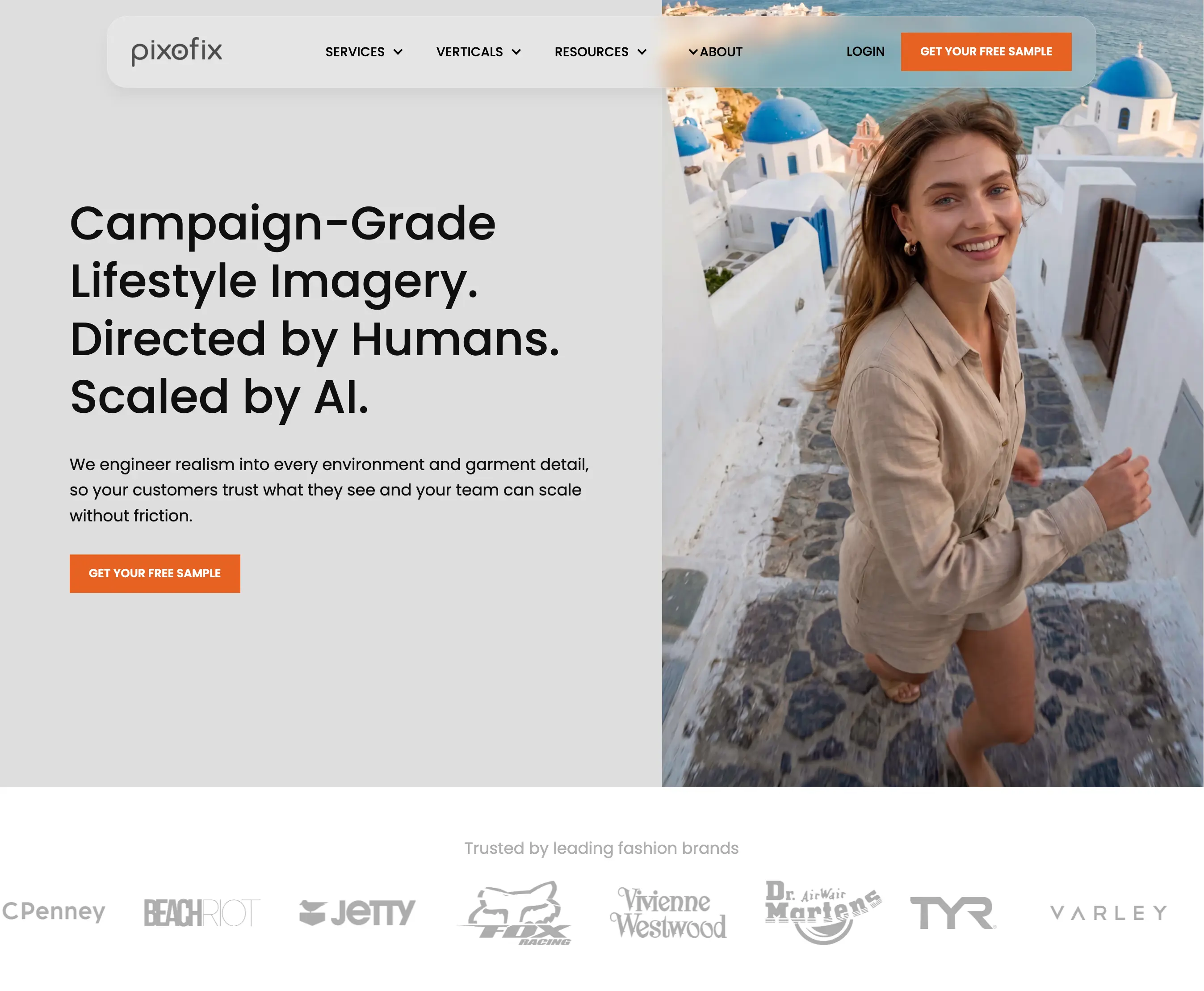
Best for: brands that already have their creative direction locked and want AI visual production handled reliably at any volume, without managing the process themselves.
At Pixofix, AI visuals are not a side project bolted onto a retouching business. We built the studio around one problem specifically: brands know what they want their visuals to look like, but turning that direction into finished, on-brand assets across a full catalog or campaign is where most AI workflows break down. That is the gap we work in.
Every project runs through a team built for it, not a generic pipeline. AI artists handle the creative execution, AI engineers manage the models and tooling behind it, garment experts check that fabric, drape, and fit read correctly rather than looking synthetic, and retouchers do a human quality check on every single visual before it ships. Nothing goes out untouched by a person who understands fashion imagery specifically.
That team structure is also why we do not treat volume as a separate pricing tier or a slower lane. Whether a brand needs a handful of campaign visuals or a full seasonal catalog, the process is the same: the creative direction is set once, and production scales from there. Delivery runs in days, with the exact timeline depending on volume rather than a fixed window.
This is also where I would push back gently on how "alternative to Neural Fashion" gets framed. A generation tool gives you output. What we are built to give you is production: the same visual standard held consistently whether it is 20 images or 2,000, checked by people who know what a fashion image is supposed to look like before it reaches you.
For brands whose visuals lean toward campaign and lookbook content, our AI Lifestyle service is the more specific starting point. For product-detail-page work at catalog scale, AI PDP is built for that specifically.
2. Superside: Broad Creative Capacity, With Fashion as One Category Among Many
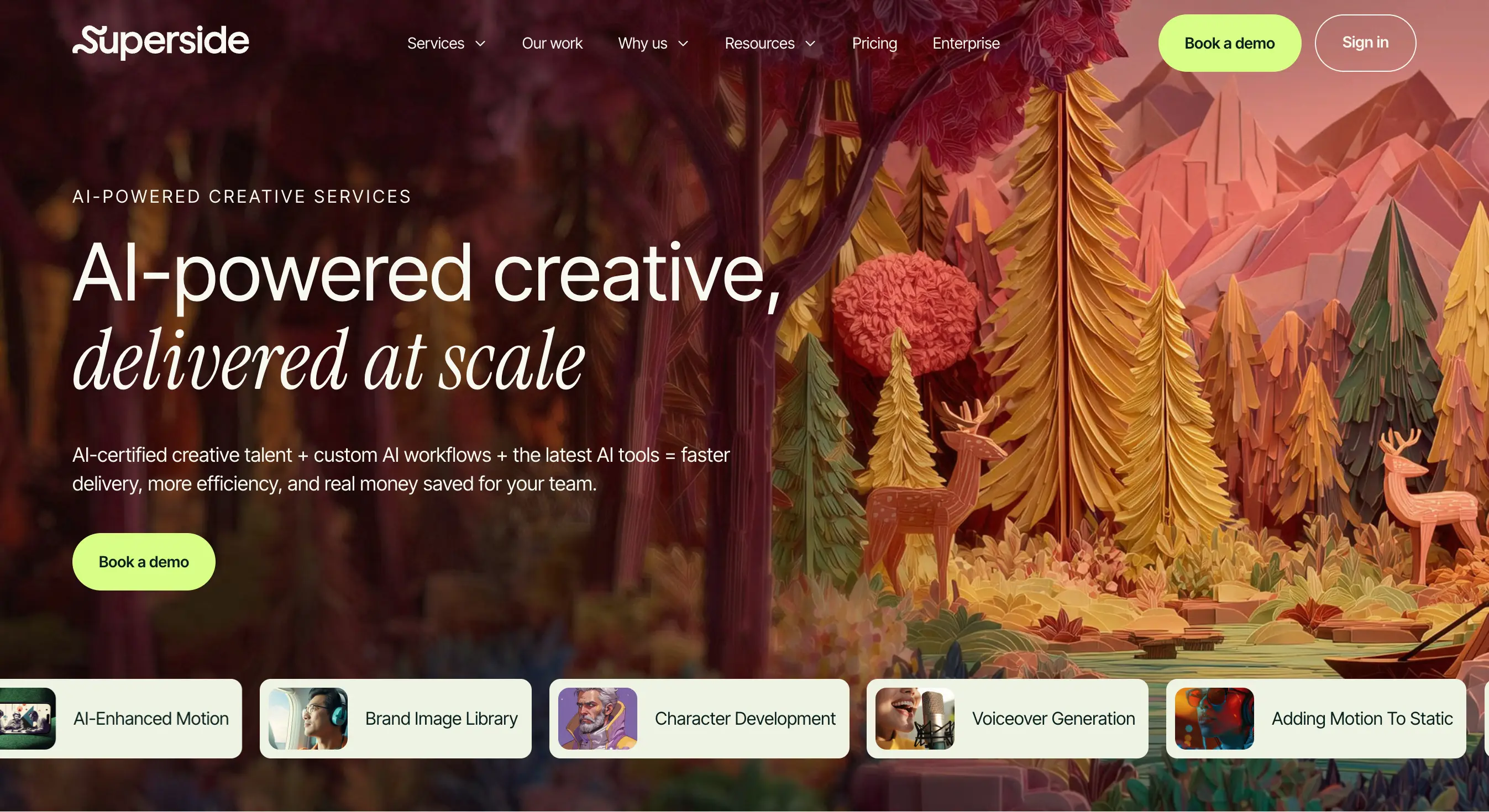
Best for: brands that need AI-assisted creative support across many formats and channels, where fashion visuals are one need among several rather than the primary one.
Superside runs as a subscription creative service, not a fashion specialist. Its work spans ad creative, branding, video production, presentation design, web design, and more, across SaaS, fintech, and ecommerce broadly. Each client gets a dedicated creative team plus a project manager, with AI built into the workflow at the briefing, concept, execution, and review stages.
Its client roster (Colgate-Palmolive, Amazon, Reddit, and apparel distributor S&S Activewear among them) reflects a broad enterprise base rather than a fashion-focused one, and fashion is not treated as its own discipline the way it is at an agency built for nothing else. There is no fashion-specific team structure, no garment or fabric expertise mentioned anywhere in its published materials, and no fashion-specific production case study on its own site.
3. Pixelmoda: AI-Accelerated Photography, Not AI-Generated Visuals
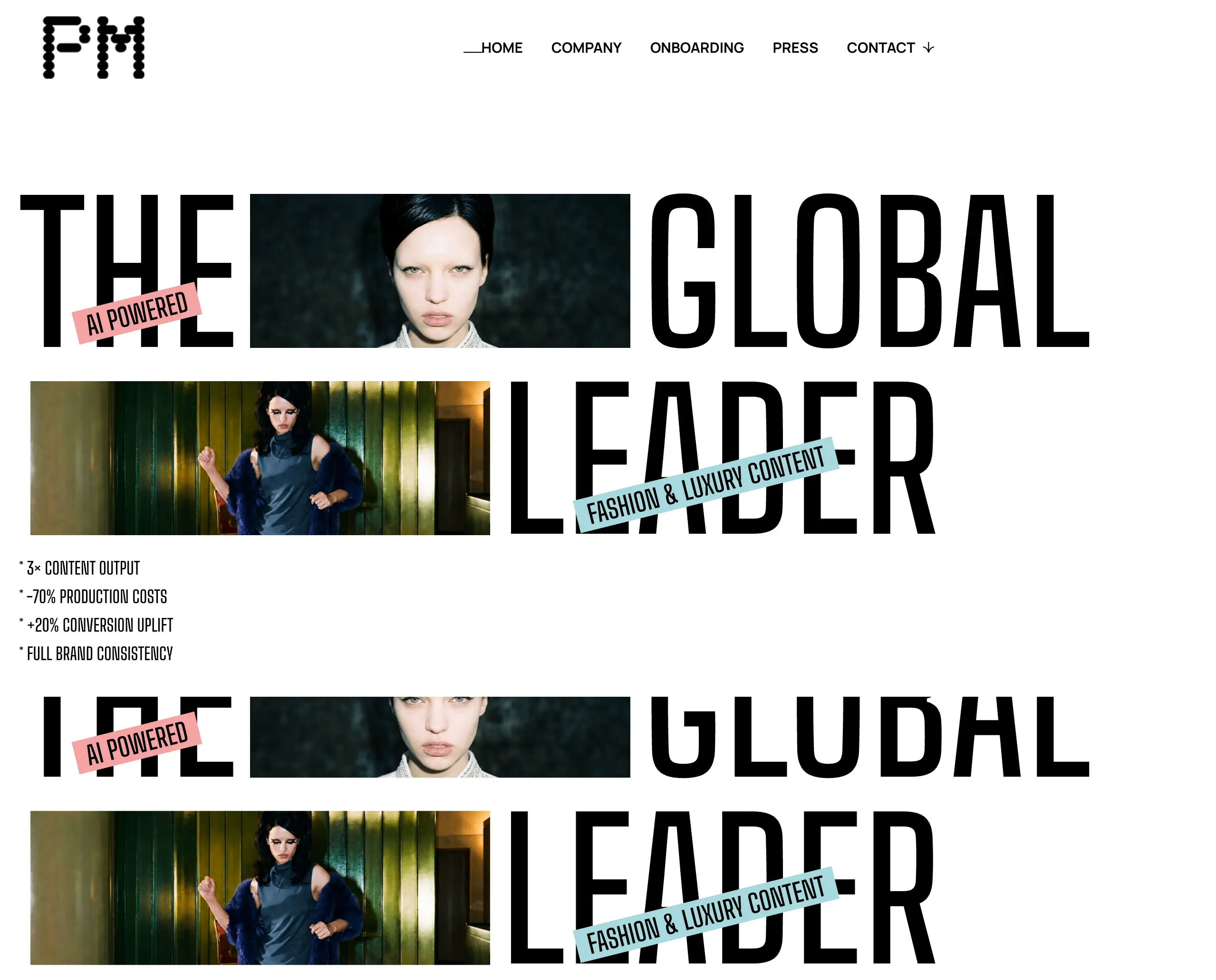
Best for: brands that want to keep shooting on real models but need the post-production side of that process running faster.
Pixelmoda is not a generative AI agency. Founded in Milan in 2021, it has grown into one of the largest producers of ecommerce photo and video content for fashion and luxury brands, but the process still starts with a real shoot on a real model. AI's role sits in production and post, where a proprietary system trained on each client's visuals gives the production team feedback during editing rather than generating images from scratch.
Pixelmoda operates with roughly 850 employees across 14 global locations, able to staff 50 or more team members onto a single account within hours. Third-party coverage has reported sales lifts of 5 to 15 percent and cost reductions of 70 to 90 percent versus conventional studios for brands using this model, though these figures come from outside analysis, not Pixelmoda's own published data.
The tradeoff is structural: no photoshoot is removed from the process, so the cost, scheduling, and logistics of physical production remain, even with AI compressing the post-production timeline.
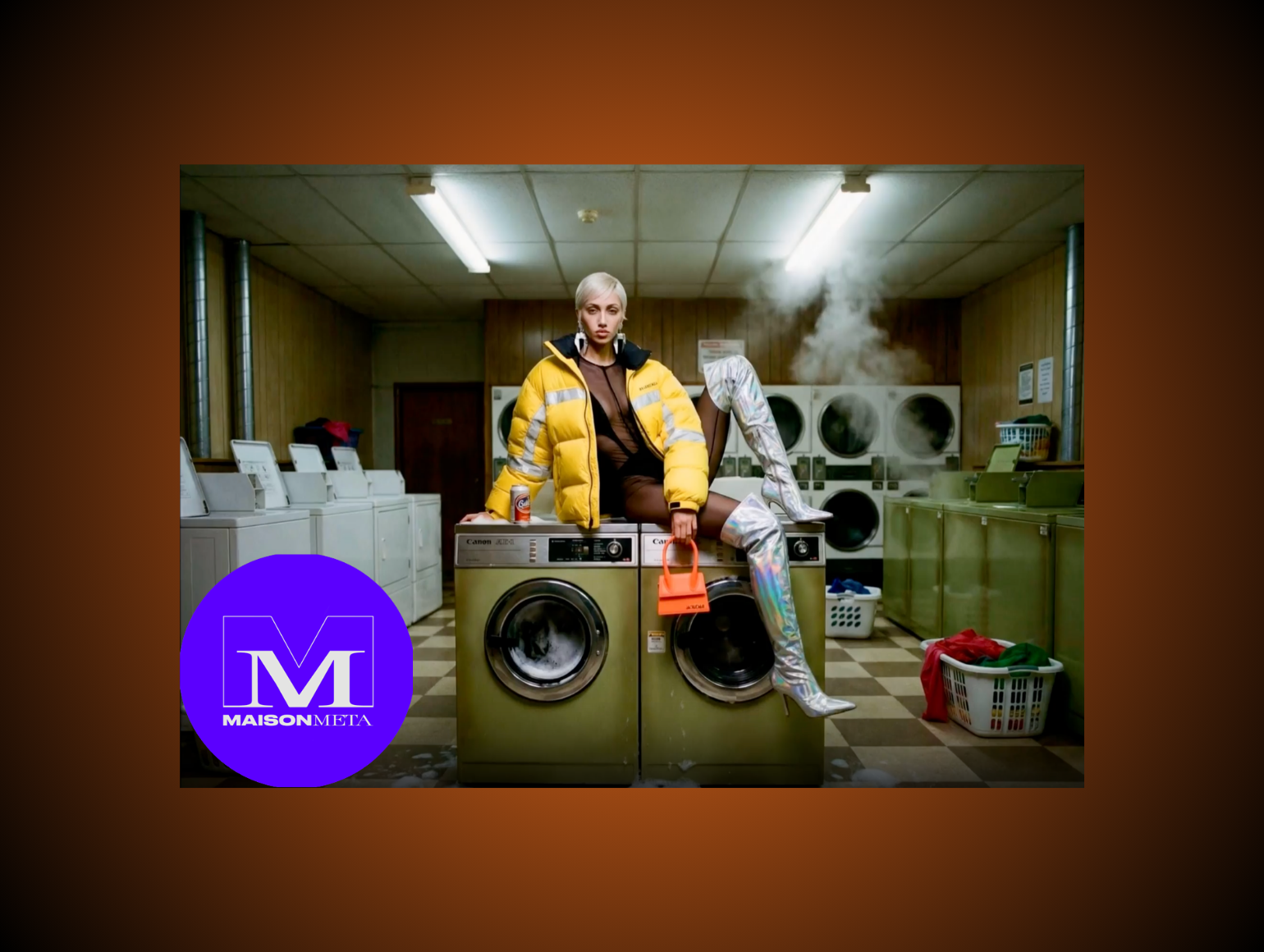
4. Maison Meta: A Dedicated Generative AI Agency for Campaign Work
Best for: fashion and luxury brands running high-concept campaign work.
Maison Meta is a generative AI agency built exclusively around fashion, beauty, and luxury, headquartered in New York with teams in Paris and London. It delivered what it describes as the first official AI fashion campaign in late 2022, with Moncler Genius, and has since worked with Dolce & Gabbana, Tory Burch, Victoria's Secret, Zalando, and Mango.
Capabilities include tech-pack-to-photo (generating product shots from technical drawings before a physical sample exists), virtual try-on, and custom model training, alongside its own tool, Seeed, which it also sells as a standalone product outside its agency client base. Maison Meta reports 50 or more AI projects delivered and 30 or more brand partners, though these are self-reported figures, not independently verified.
No turnaround time, production-volume figures, or catalog-scale case studies are published anywhere on its site. Its published work centers on campaign and brand launches, not day-to-day catalog production, and there's nothing on the site addressing how the agency handles ongoing, high-SKU volume.
5. Veicolo (Haute Labs): AI Photography Bundled Inside a Marketing Agency
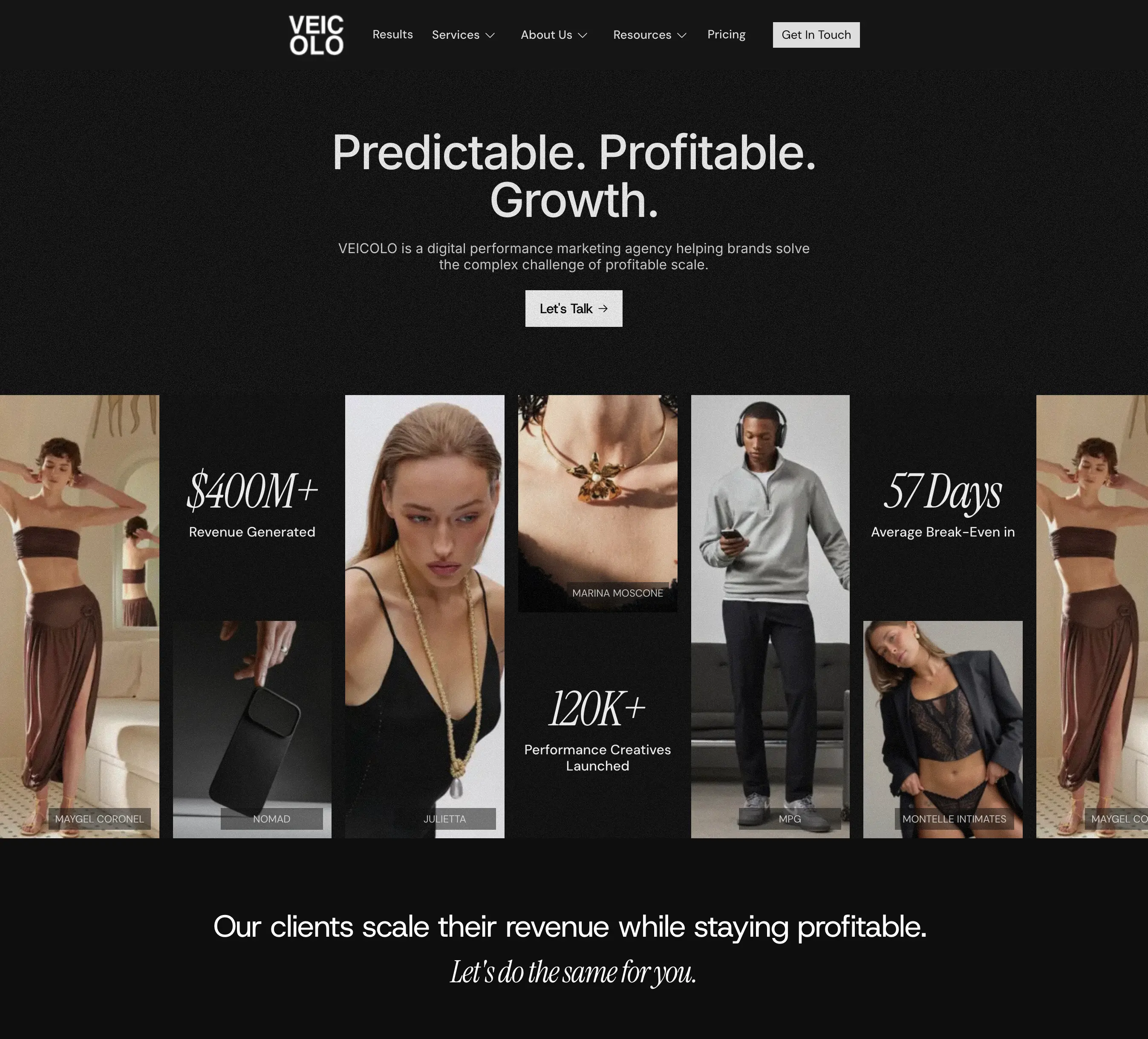
Best for: brands already working with Veicolo for ad management who want AI visual production from the same vendor.
Veicolo identifies itself as a digital marketing agency first, built around Meta ads, growth strategy, and CAC efficiency for ecommerce brands. Haute Labs is its AI photography product, added to that existing service line rather than built as a standalone fashion AI studio.
The workflow: a brand briefs its campaign and sends product images, and Veicolo's AI generates on-model visuals using virtual fashion models. No team size, client count, or turnaround figure is published for Haute Labs specifically. Its published work is almost entirely marketing case studies (ad funnel structure, CAC scaling); nothing addresses garment fidelity, fabric accuracy, or production at catalog volume.
Neural Fashion Alternatives Compared at a Glance
The five criteria from the section above are the same five used here, applied consistently to all five agencies. A few gaps are worth reading carefully rather than skimming past: two of the five agencies don't publish anything on human oversight or production scale, which isn't a minor omission if that's the thing you actually need to know before committing to a partner.
Pixofix is the only agency in this table that combines fashion-exclusive specialization, published human QC on every image, and stated production scale in the same row. I want to be direct about why that's worth noticing rather than letting the table make the point silently: it's not that the other four are weak agencies, it's that none of them state all three of those things together the way this comparison requires.
Choosing the Right Alternative for Your Production Needs
Five real options is more useful than five interchangeable ones, but it also means the right pick depends on what you're actually solving for rather than a single "best" answer.
If your primary need is catalog or PDP visuals at ongoing volume, with fashion-specific expertise and a human check on every image, Pixofix and Pixelmoda are built around that kind of production, though through different methods: fully AI-generated versus AI-accelerated real photography. If you're removing the photoshoot entirely and want a dedicated generative AI specialist, Maison Meta is the closest structural match to what Neural Fashion offers. If your visual needs extend well beyond fashion into broader brand and marketing creative, Superside's breadth may outweigh the lack of fashion specialization. If you're already working with an agency on ad spend and want to add AI photography without a new vendor relationship, Veicolo's bundled model solves for convenience over specialization.
The generation method question is worth settling first, before comparing anything else. A brand that wants to keep real photography but speed up delivery is solving a different problem than a brand that wants to eliminate the shoot entirely, and conflating the two leads to comparing agencies that were never actually competing for the same job.
For a broader view of AI creative agencies beyond this specific comparison, our Best AI Creative Agencies page covers the wider field in more depth.
If your catalog spans multiple garment categories with different fit and fabric requirements, that's usually where fashion-exclusive specialization stops being a nice-to-have and starts being the deciding factor. That's the gap Pixofix is built to close: fashion-specific expertise, human QC on every image, and production that scales without changing shape between a small campaign and a full seasonal catalog.



.png)
.png)
