.png)

5 Best Maison Meta Alternatives for AI Fashion Visuals (2027)
Why Look Beyond Maison Meta
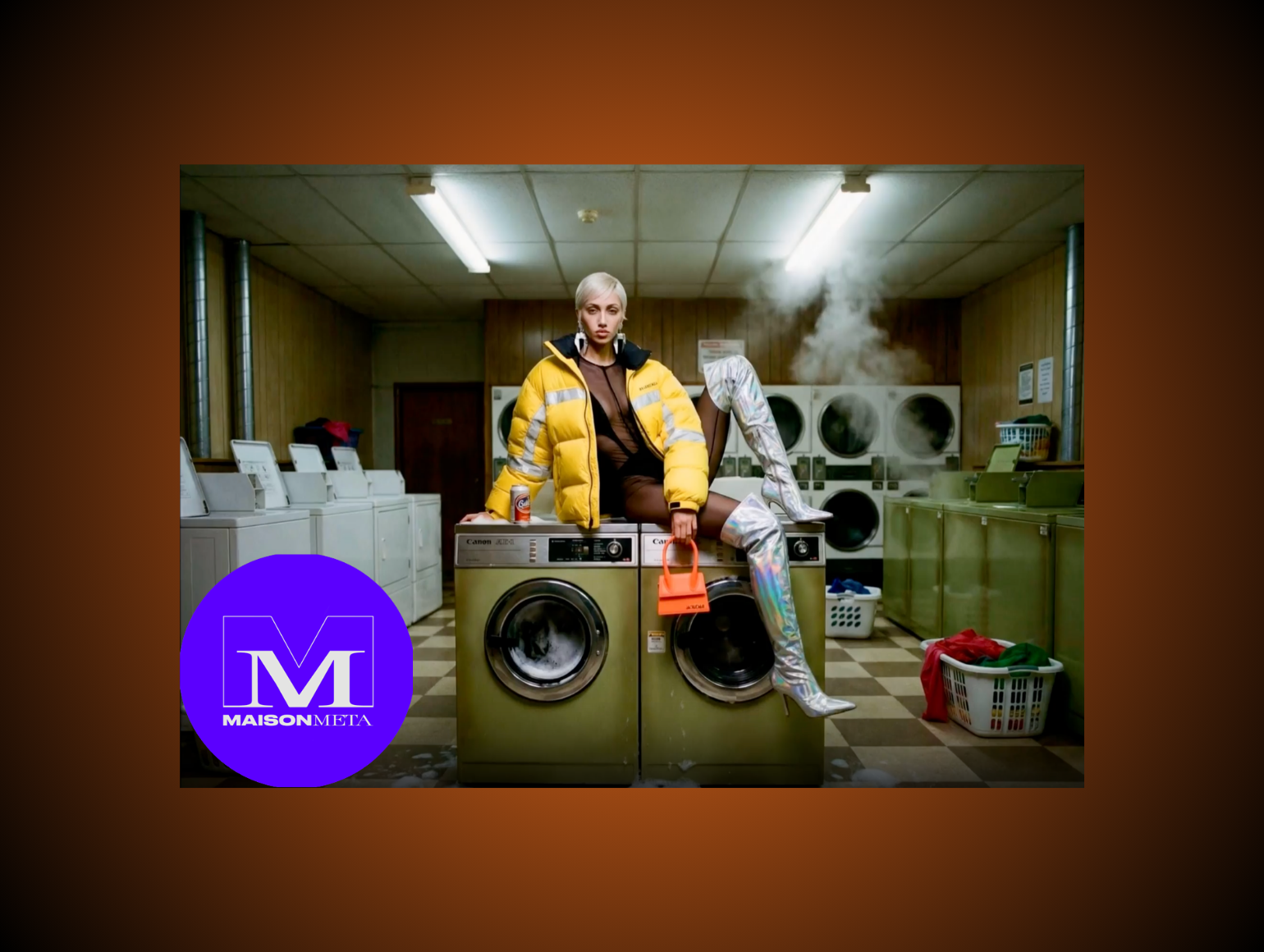
Maison Meta built its name on genuinely ambitious work. The agency ran what it calls the first official AI fashion campaign back in 2022, for Moncler Genius, and has since worked with brands like Dolce & Gabbana, Revolve, and Zalando on AI-driven campaigns and virtual try-on projects.
That track record is also exactly why a lot of brands start looking elsewhere. Maison Meta operates on a custom-quote agency model with no published pricing, which puts it out of reach for teams below a certain size or budget. Its strength is bespoke campaign work and R&D, not necessarily the kind of steady, high-volume product imagery a growing ecommerce catalog needs every week.
I work on the production side of this problem daily, and the brands that come to me after evaluating Maison Meta usually want one of two things: a lower barrier to entry, or a partner built specifically around volume rather than one-off campaign moments. The five alternatives below cover both.
Section 2: The 5 Best Maison Meta Alternatives
1. Pixofix
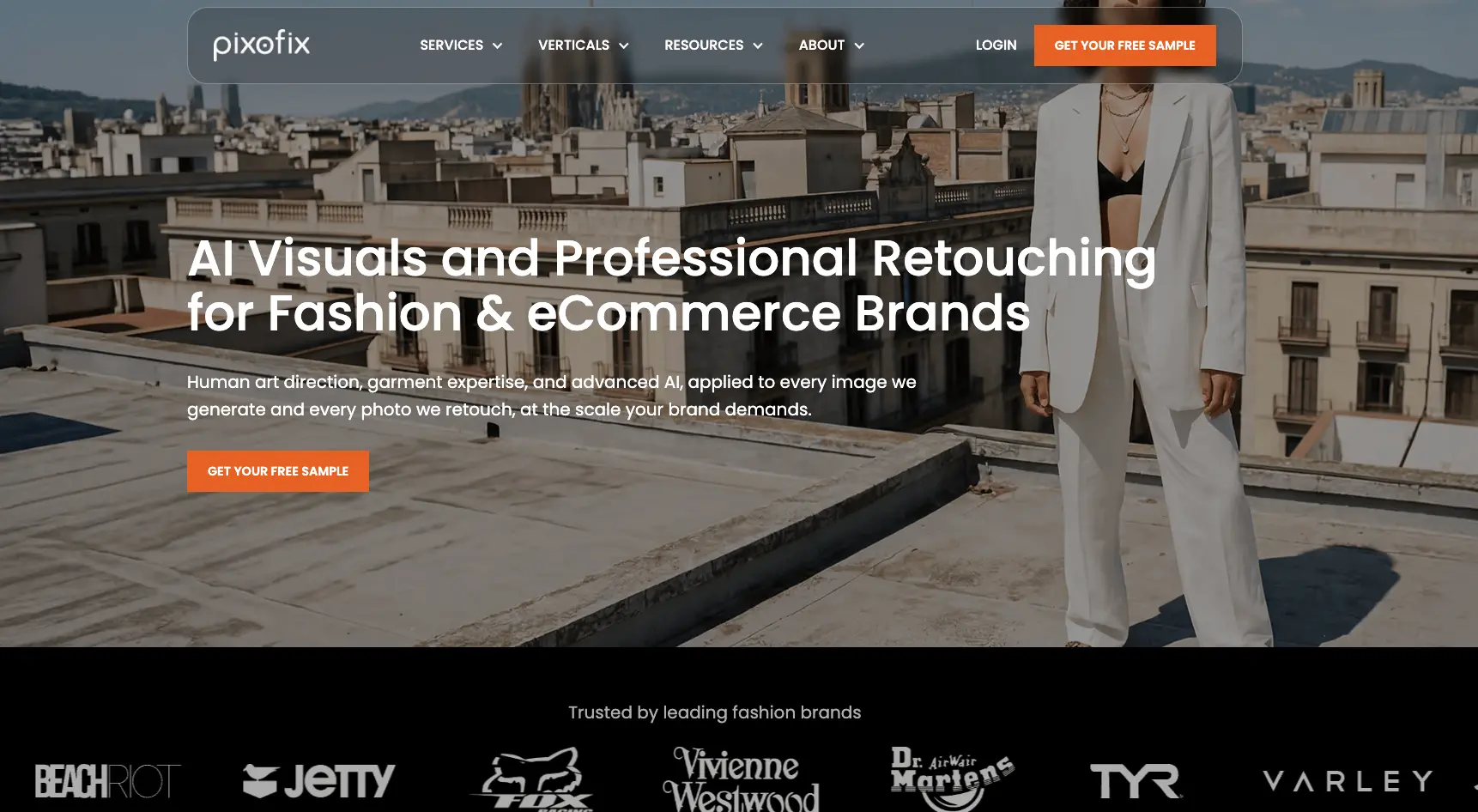
Best for: fashion and ecommerce brands that already have their creative direction locked and want AI visual production at real catalog volume, without an enterprise agency price floor.
This is where I have to be upfront about my own bias: I work here, so take the framing for what it is. But the facts stand on their own. At Pixofix, every project runs through a mixed team of AI artists, AI engineers, and garment experts, not a single generalist operator pushing prompts. That garment expertise matters more than most briefs give it credit for. Fabric drape, seam placement, and print alignment are where AI-generated fashion imagery falls apart fastest, and it is exactly what a team with retail garment experience is trained to catch.
We built our workflow around hybrid AI plus human review, which means AI handles the generation and a human retoucher signs off on every single image before it ships. After eight years in fashion, that combination is the difference between AI visuals that look impressive in a deck and AI visuals a brand can actually publish at scale.
Unlike Maison Meta's custom-quote agency model, Pixofix is built to serve any volume, from a single campaign to a full seasonal catalog, without requiring a bespoke negotiation to get started.
2. Superside
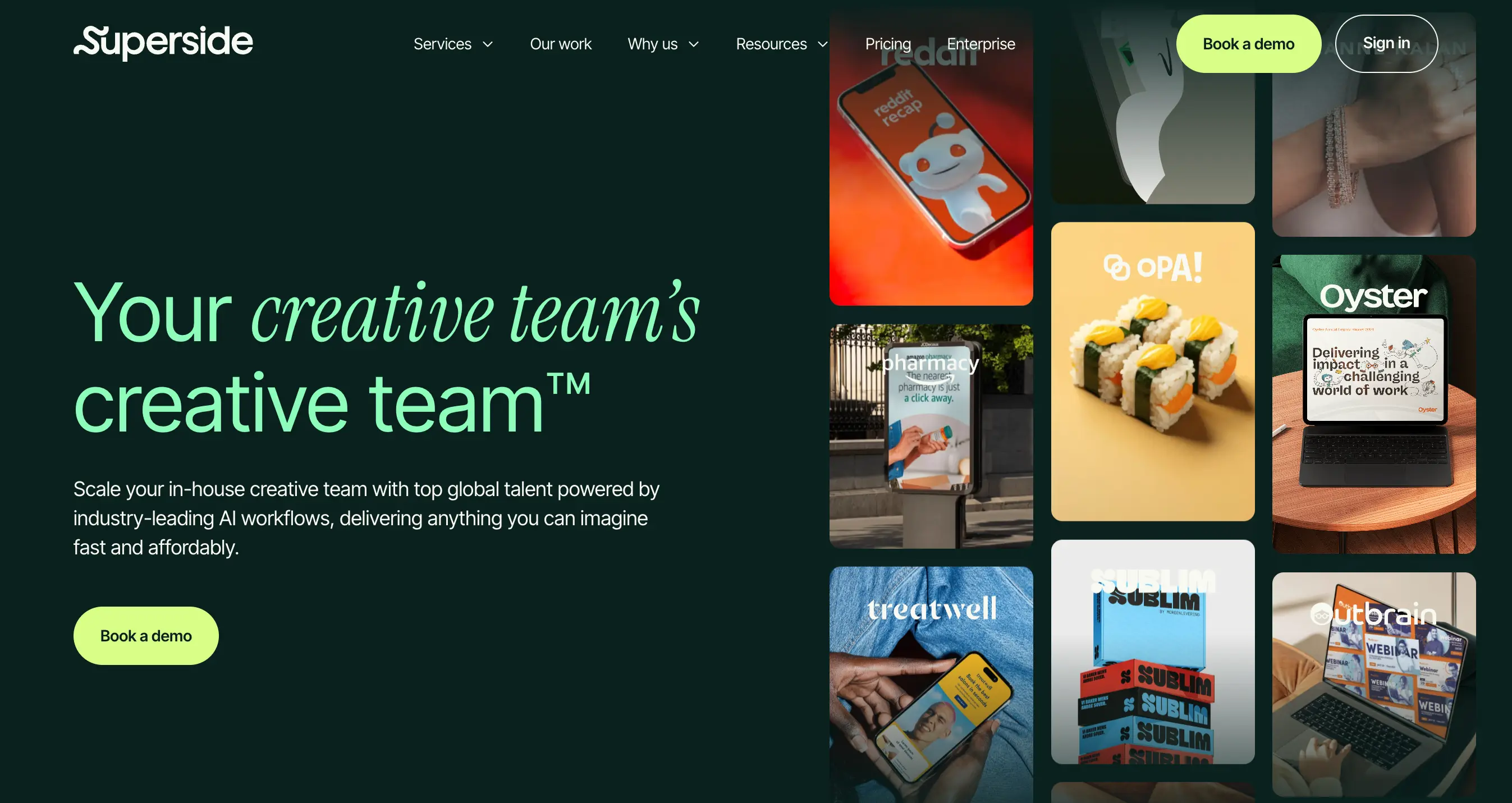
Best for: large enterprises that need broad creative output across many formats, not fashion specifically, and have the budget and contract length to match.
Superside is a subscription creative-as-a-service platform, and fashion imagery is one slice of a much wider offering that also covers ad creative, branding, video, and presentation design. Flex subscriptions start at a $15,000 monthly minimum on an annual term, and Dedicated teams start at $30,000 a month on a 12-month term, both with an additional $1,000 monthly software fee for platform access.
That pricing structure tells you who Superside is really built for. It is a strong fit for a large marketing organization that wants one subscription to cover everything from web design to social ads. It is a much harder case for a fashion brand that specifically needs product and campaign imagery and does not want to pay for, or wait on, a team also juggling unrelated creative categories.
3. Pixel Moda
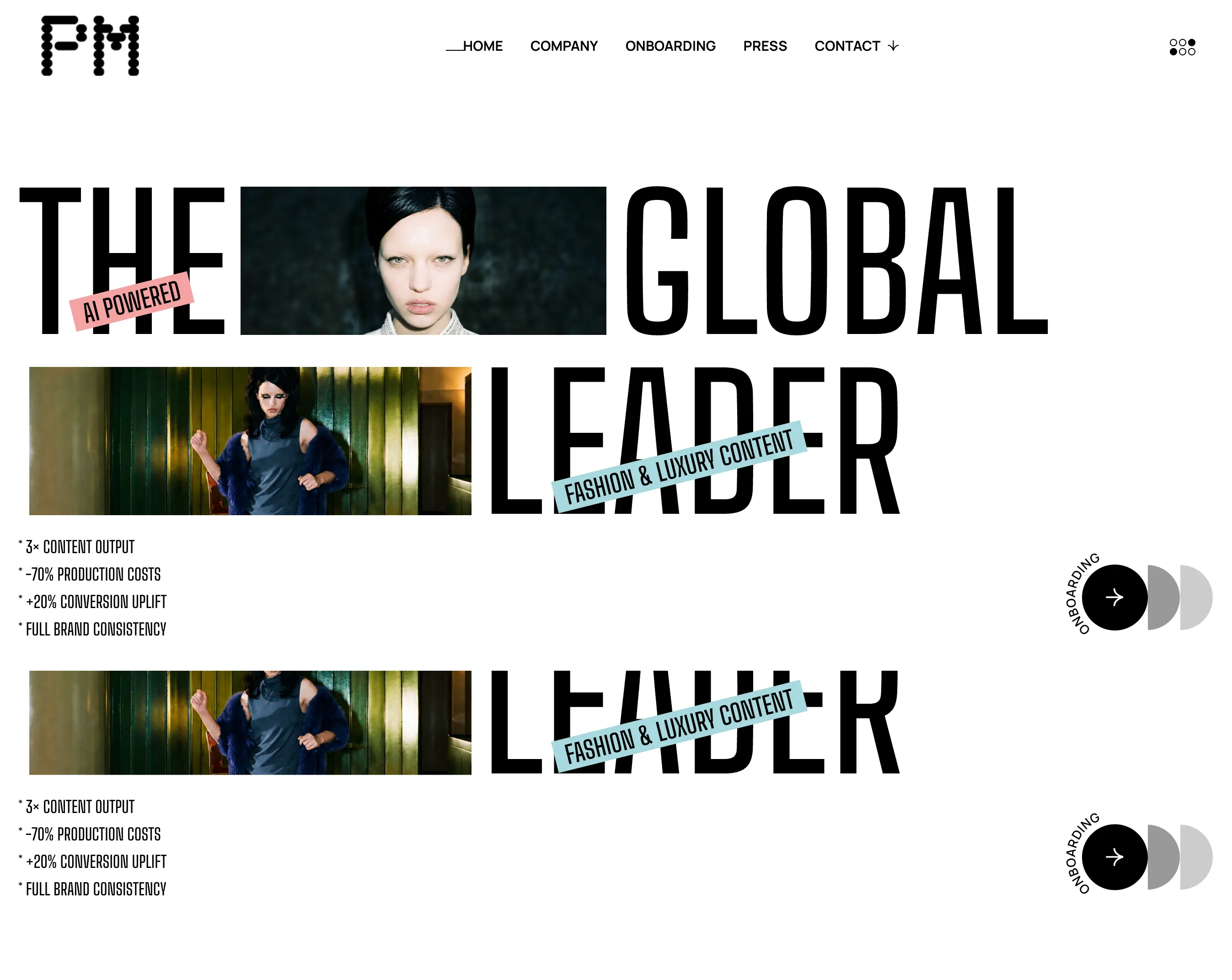
Best for: large catalogs that want real photography enhanced by AI rather than fully synthetic generation, and have an enterprise sales relationship in place to support it.
Pixel Moda takes a different technical approach than most names on this list. Items are shot for real, with AI acting as an on-set co-pilot for photographers and models rather than generating renderings from scratch. The company supports production of roughly 14 million pictures and videos a year across more than 900 global brands and retailers.
That scale is genuinely impressive, and the real-photography-plus-AI approach appeals to brands wary of fully synthetic imagery. The tradeoff is accessibility. Pixel Moda operates through an enterprise sales process with no self-serve option, so it fits large, established catalogs far better than a brand still scaling its production volume.
4. Neural Fashion
Best for: small to midsize fashion brands, particularly in Europe, that want a boutique agency focused only on fashion rather than a generalist creative platform.
Neural Fashion started as a project of Raona Group, a technology consultancy with more than 20 years in the market, built specifically to connect fashion brands with AI for their creative processes. Its client roster, including Pronovias and Desigual, points to a European mid-market focus rather than the luxury-house tier Maison Meta typically serves.
I'd call this the closest positioning to Maison Meta on this list, just earlier stage and smaller scale. Neural Fashion does not publish pricing, working instead through a lead form, and I found no public evidence of the high-volume production capacity a growing ecommerce catalog would eventually need.
5. FASHN AI
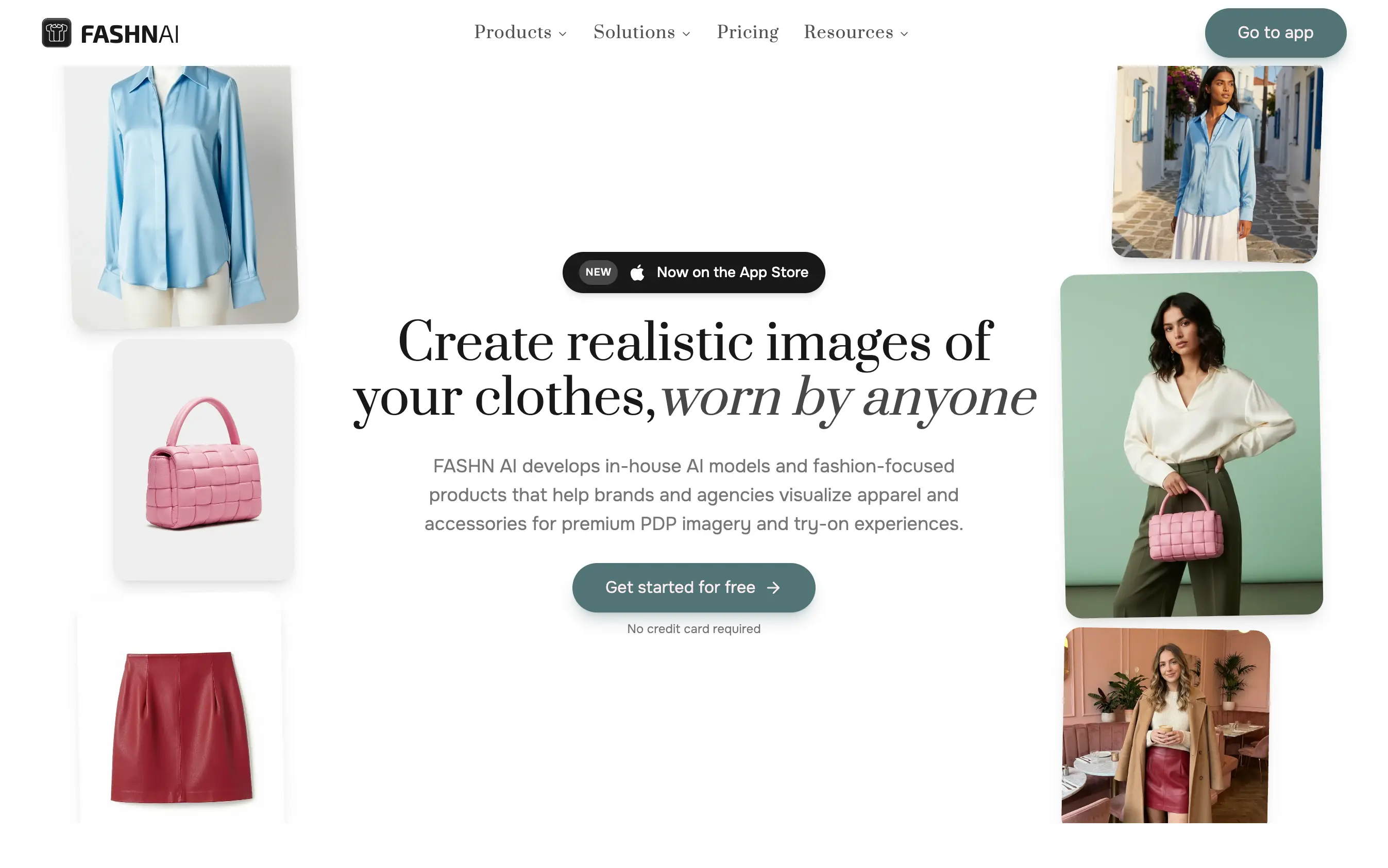
Best for: solo designers or small teams who want instant, self-serve AI image generation with no agency relationship and no minimum spend.
FASHN AI is a straightforward software tool rather than a service. Plans run from $19 a month for the Basic tier up to $99 a month for the Agency tier, with every account starting on 10 free credits and no credit card required to try it.
This is the cheapest and fastest way onto this list, and it is a legitimately good fit for someone who needs a handful of on-model shots without any production overhead. What it does not include is a human quality layer or a dedicated team learning a brand's specific garments over time, which becomes a real gap once a brand is producing hundreds of SKUs a season rather than a handful of hero shots.
Comparing the 5 Alternatives at a Glance
Five different approaches solve five different problems. Before you commit to any of them, it helps to see the pricing model and AI approach side by side, since those two factors usually decide the shortlist faster than anything else.
The table below breaks down all five providers by who they're actually built for, how they price, and how much of the process is AI versus human.
How to Choose Between These Five
The decision usually comes down to two questions: how much of your creative direction is already set, and how much of the process you want a human checking.
If you already know what you want and just need it produced accurately at volume, a hybrid model like Pixofix or Pixel Moda makes more sense than a full-service creative agency. If you need Maison Meta's original strength, campaign concepting and R&D from scratch, Neural Fashion is the closer match on scope, just at an earlier stage and smaller scale. If your creative needs go well beyond fashion imagery, Superside's breadth justifies its price floor. And if you're a solo operator who just needs a handful of on-model shots this week, FASHN AI will get you there faster than any agency conversation.
I'd only push back on one instinct: don't pick a tool because it's the cheapest option on this list. Pick the one that matches how much oversight you actually want on the images going out under your brand name.



.png)
.png)
