.png)


Best Claid AI Alternatives for Fashion Brands in 2027
Understanding Why Brands Look for Claid AI Alternatives
Claid AI is built as an API-first image platform. Background removal, upscaling, color and lighting correction, and, since Claid's own coverage of on-model AI tools, an AI fashion studio that turns flatlays or ghost mannequin shots into on-model images. Pricing runs on credits, from a 50-credit free trial up to unlimited-credit Business plans with custom API workflows and priority support.
That structure works well when you have a developer to build the integration and a review process to catch what the model gets wrong. It works less well when you're a small marketing or creative-ops team trying to get a catalog live without writing code, or when what you actually want is someone else signing off on quality before an image ships.
That gap is usually where the search for alternatives starts, and it splits into two different problems. Some brands want a more turnkey tool built specifically for fashion: model generation, ghost mannequin, virtual try-on, without the credits-and-endpoints overhead of an API. Others want the opposite solved entirely. Not a better tool, but no tool to manage at all, just the finished, checked asset landing in their folder.
I come at this from the demand side of marketing, not from inside a retouching queue, but the pattern is one I recognize from any software-buying decision I've run. Infrastructure and finished output are two different purchases, and most of the frustration I see brands describe comes from buying the wrong one for the team they actually have, a distinction our honest review of what AI product photography can and can't do yet gets into as well.
Below, I compare four real Claid AI alternatives, WearView, Rawshot, WizStudio, and Cloudinary, plus where Pixofix's managed model fits for the second kind of buyer.
Criteria for Choosing a Claid AI Alternative
Before comparing tools by name, it helps to know which axis actually matters for your catalog, because the five options in this comparison sit in different places on each one.
Volume is the first. If you're producing a handful of hero images a month, almost any tool here will handle it. Once you're running seasonal drops across hundreds or thousands of SKUs, differences in batch handling, per-image cost, and how consistently a model holds its identity across a full product line start to show.
Oversight tolerance is the second, and the one I see buyers underestimate most often. Every self-serve tool in this comparison, Claid AI included, generates images that need a human pass before they're catalog-ready: color drift, garment texture artifacts, inconsistent lighting between shots in the same set. Deciding whether that review happens on your team or someone else's is really a decision between a tool and a service, not between feature lists.
Integration effort is the third. Claid AI and Cloudinary are both API-first, which means someone on your team, in-house or contracted, has to build and maintain the connection. WearView, Rawshot, and WizStudio are closer to ready-made apps: sign up, upload, generate. Neither approach is wrong on its own, but choosing the API option without a developer to run it is how these projects stall.
Fashion-specific capability is worth checking directly rather than assumed. Claid AI's published feature set covers on-model generation, background removal, and upscaling, not the ghost-mannequin-specific tooling that WearView builds around, so "AI image enhancement" and "AI fashion photography" aren't always the same shopping list even when the marketing language overlaps.
Cost structure closes it out. Credit-based pricing, which Claid AI, Rawshot, and Cloudinary all use, scales with volume and is easy to underestimate if you don't map your actual monthly output against the per-image credit cost first. Our breakdown of outsourcing versus in-house retouching costs walks through that math for teams weighing a managed alternative instead.
The Best Claid AI Alternatives
With those criteria in mind, here are the five options worth putting next to Claid AI, starting with the one that solves a different problem entirely before moving into the self-serve and API tools that compete with Claid AI more directly.

1. Pixofix
Pixofix isn't a Claid AI competitor in the software sense. We don't sell you a tool to operate, we take your raw product photos and creative brief and return finished, brand-consistent assets, using an AI plus human hybrid process rather than an unsupervised model.
That distinction matters most at the volume end of this comparison. For Fashion Nova, our team processes over 25,000 images a month with a 12-hour average turnaround, down from the 48 hours their previous multi-vendor setup took, largely by replacing fragmented freelancer handoffs with a dedicated team trained on their specific SOPs and a two-layer technical and brand QA pass before delivery. That last part, a second human checking the first human's work, is the piece every self-serve tool in this comparison skips by design, since there's no reviewer built into an API call.
I'd frame Pixofix as the right fit for brands that have already concluded they don't want to run a tool, whether that's because nobody has time to review AI output at scale, or because the catalog is big enough that inconsistency between images becomes its own cost. If you're testing concepts on a handful of SKUs, this is more infrastructure than you need; our high-volume photo retouching service and AI PDP service are both built around the catalog-scale end of that range, not one-off edits.
2. WearView
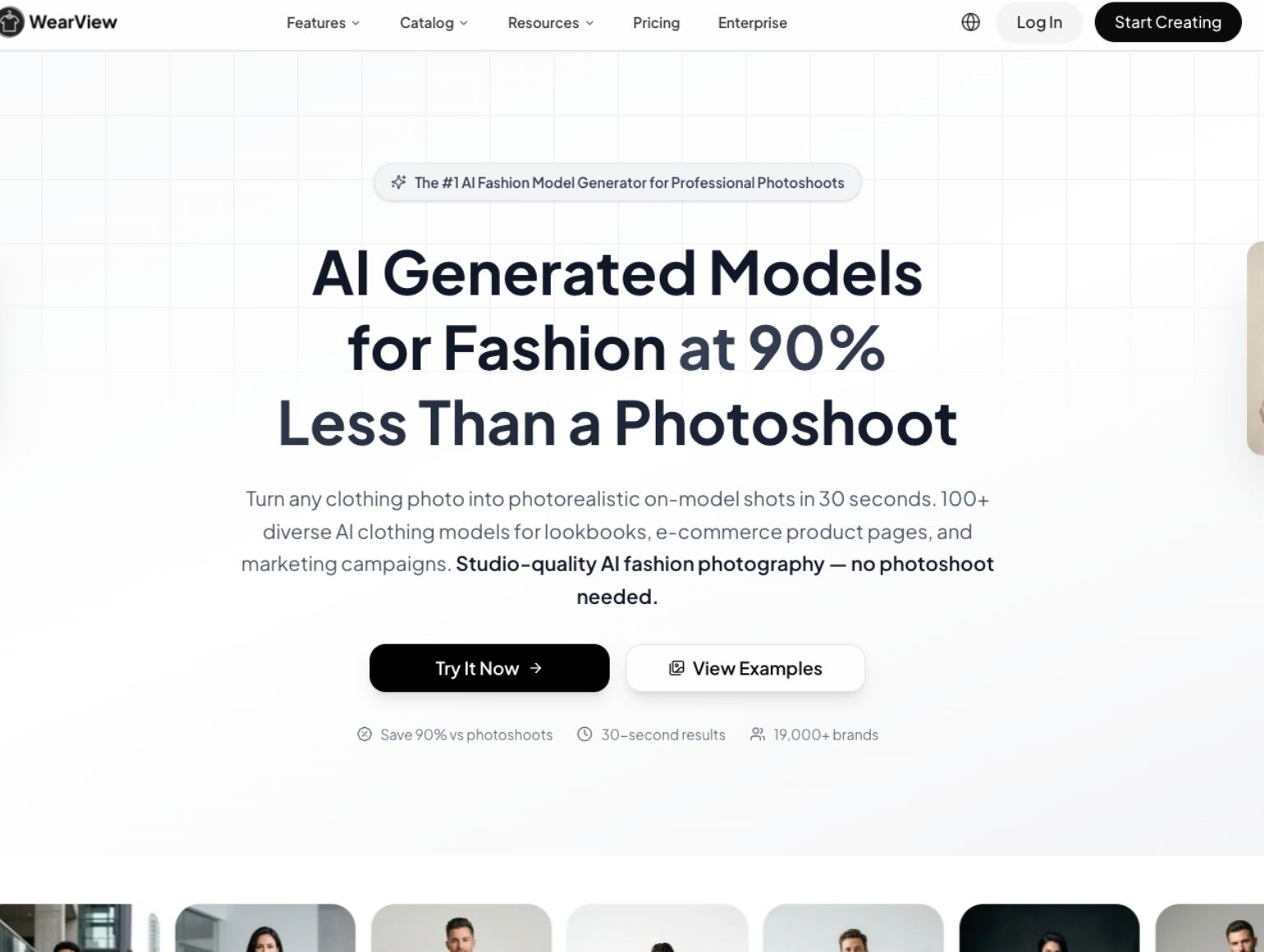
WearView is a self-serve app for ghost mannequin removal and AI model generation, built specifically for fashion. Its Lite plan starts at $29 a month for 50 credits (roughly 25 images) and covers virtual try-on, AI model generation, and pose control, but ghost mannequin editing and AI video only unlock on the $49-a-month Pro plan and above. That tiering is worth checking closely if ghost mannequin removal is the actual reason you're evaluating the tool, since it isn't included at the entry price.
Best for: fashion brands that want a self-serve app dedicated to ghost mannequin editing and AI model generation, without an API to manage.
3. Rawshot
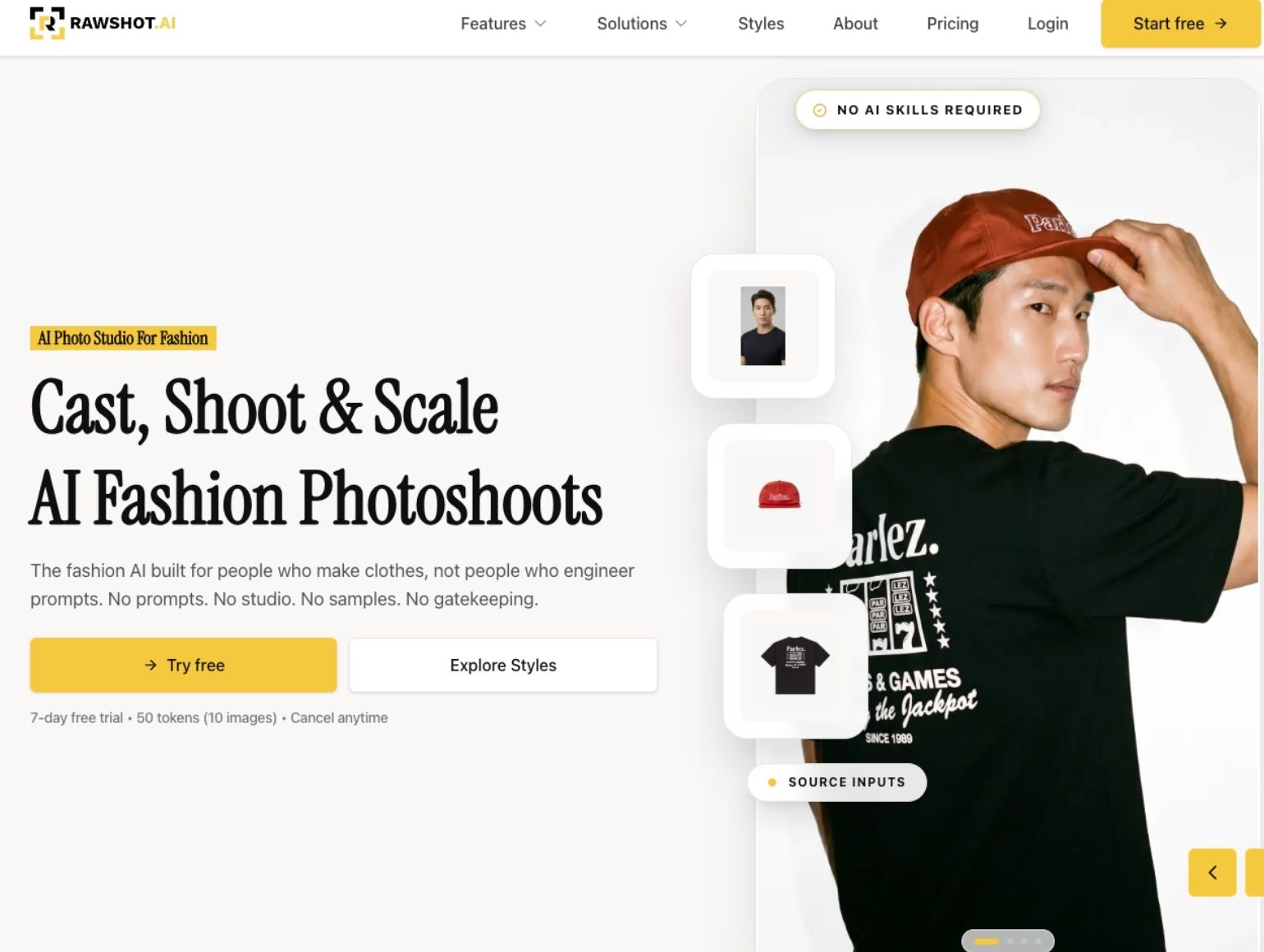
Rawshot is the more budget-oriented option here, with plans from $9 to $179 a month and a 7-day free trial. Every tier includes access to the same library, over 600 synthetic models, 150-plus camera styles, and 1,500-plus backgrounds, so the difference between plans is credit volume, not feature access. Image generation costs 5 tokens each, which is easy to plan around at low volume and worth modeling out before committing at higher volume.
It's a reasonable entry point for brands experimenting with AI fashion models for the first time, less suited to brands that already know they need consistent human QA on every image.
Best for: budget-conscious fashion brands testing AI-generated models and imagery for the first time, without a large monthly commitment.

4. WizStudio
WizStudio, built by WizCommerce, targets a different buyer than the other fashion-first tools here: wholesale and retail brands managing 100 to 10,000-plus SKUs across categories that go beyond apparel, including furniture, home decor, and jewelry. Plans run from $249 to $1,099 a month, and credits only charge when you approve and download an image, which is a fairer structure than paying upfront for generations you reject.
WizStudio also offers a done-for-you tier alongside its self-serve option, putting it closer to a hybrid between the software and service ends of this comparison.
Best for: wholesale and multi-category retailers scaling a catalog from a few hundred toward several thousand SKUs, who want the option of human review without switching providers.
5. Cloudinary
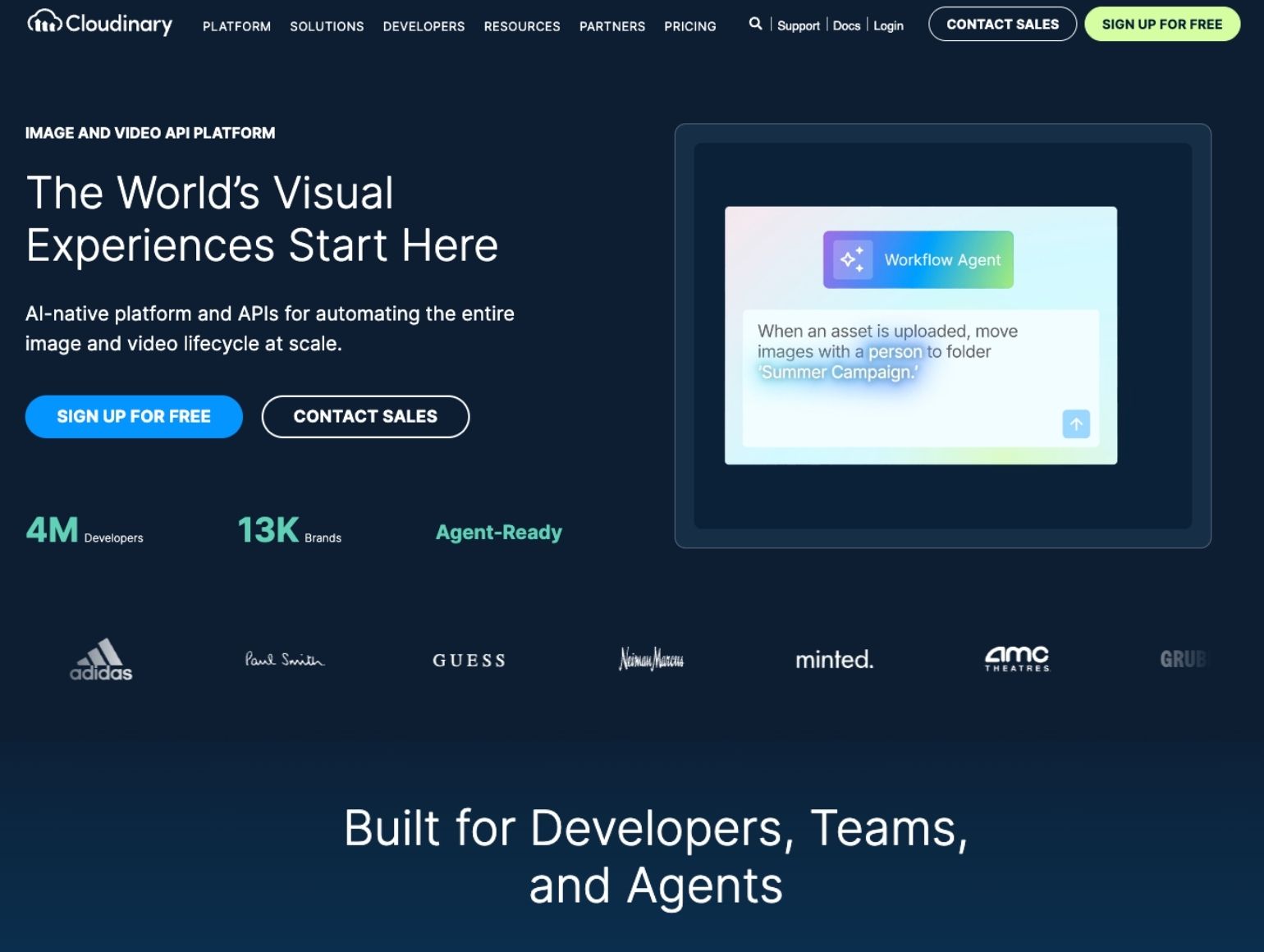
Cloudinary is the outlier in this list, and the closest thing to what Claid AI actually is: an API-first media platform, not a fashion app. Its free tier gives 25 monthly credits (1 credit equals 1,000 transformations or 1GB of storage or bandwidth), with paid plans from $99 to $249 a month and enterprise pricing above that. It handles AI background removal, generative effects, and upscaling, all through an SDK a developer integrates into your existing stack, and it has no on-model generation or virtual try-on feature in its published toolset.
Cloudinary makes sense if you already have engineering resources and want image processing built into your own pipeline rather than a standalone app. It's a poor fit for a small marketing or creative-ops team without a developer to spare, which is worth saying plainly rather than letting the pricing page's simplicity imply otherwise.
Best for: teams with in-house engineering resources who want image enhancement built into their own product pipeline rather than a separate app to manage.
Claid AI Alternatives at a Glance
Here's how all five options line up side by side before we get into how to choose between them.
How to Choose the Right Claid AI Alternative for Your Volume
The table above answers what each tool does. This answers which one fits the stage your catalog is actually at, which is usually the more useful question.
If you're still testing whether AI-generated images work for your product at all, start cheap and self-serve. Claid AI's own 50-credit free trial or Rawshot's 7-day trial cost nothing but a few hours, and neither commits you to a workflow you'd have to unwind later.
Once you know AI output works and you're producing a few hundred fashion images a month, WearView's Pro plan is the more purpose-built option: ghost mannequin, model swap, and consistent model identity across a small catalog, at a price that doesn't need finance sign-off.
If your catalog runs wider than fashion, wholesale and multi-category retailers moving from a few hundred toward several thousand SKUs, WizStudio's structure fits better. Credits only charge on approved downloads, and there's a done-for-you tier if self-serve output stops holding up at that scale. I'd treat needing that option as a signal, not a fallback: it usually means the catalog has already outgrown pure self-serve.
If you have engineering headcount and want image processing built into your own product pipeline rather than a separate app your team logs into, Cloudinary is the only option here actually built for that. Our decision tree for reshoot vs. retouch vs. regenerate is useful at this stage too, since the "which method" question and the "who builds it" question tend to get decided together.
And if you've already concluded that reviewing AI output yourself isn't a good use of your team's time at your volume, that's the actual case for a managed service like Pixofix, not a feature comparison at all.
Quick version:
- Testing the concept: Claid AI's free trial or Rawshot
- Fashion, moderate volume, want it in-house: WearView
- Wholesale or multi-category, scaling SKUs: WizStudio
- Have developers, want it in your stack: Cloudinary
- Want the finished asset, not the tool: Pixofix
Where This Leaves You
Claid AI is a genuinely capable API-first tool for background removal, upscaling, and on-model generation. It's built as infrastructure a team operates, not a finished asset that arrives ready to publish, and that's the actual reason people go looking for alternatives, not a quality complaint.
By this point you should know which of the other four options fits your real constraints: the fashion specialist, the budget option, the wholesale and bulk tool, or the developer-first platform. And if the honest answer is that none of them fit because reviewing AI output isn't something your team has time for, that's where a managed service changes the equation rather than just adding another option to compare.
That's the gap Pixofix fills. Not a tool with more settings, but the removal of the operating decision itself: you send the images and a brief, we return finished, QC'd assets on the turnaround your catalog actually needs.
Book a call with our creative team and receive a custom visual sample with your garments within 48 hours. Free, no commitment.




.png)
.png)
