.png)

Best FixThePhoto Alternatives for Ecommerce Photo Editing (2027)
Why Fashion and Ecommerce Brands Look Beyond FixThePhoto
If you have researched retouching services for your online store, you have probably come across FixThePhoto. It has been operating since 2003, and its core business is portrait, wedding, and headshot editing for individual photographers, priced per photo across a handful of tiers. It does also offer a product photo editing option for ecommerce sellers, priced separately from its main photographer-focused packages.
That split matters if you run a fashion or ecommerce brand. A service built primarily around single-photographer workflows does not always translate cleanly to catalog volume, consistent color across hundreds of SKUs, or the kind of turnaround a seasonal drop demands. That gap is usually what sends people looking for alternatives in the first place.
I put together this comparison after looking at five retouching-as-a-service providers that fashion and ecommerce brands actually consider in FixThePhoto's place, including how Pixofix approaches the same problem. Each one is built for a different kind of workload, so I have tried to be specific about who each is actually best for, not just what they cost.
1. Pixofix: Human-QC'd Retouching Built for Fashion Catalog Volume
I am starting with Pixofix, and I want to be upfront that I work here, so take the framing for what it is. What I can speak to honestly is the process and the facts, not a pretend neutral review.
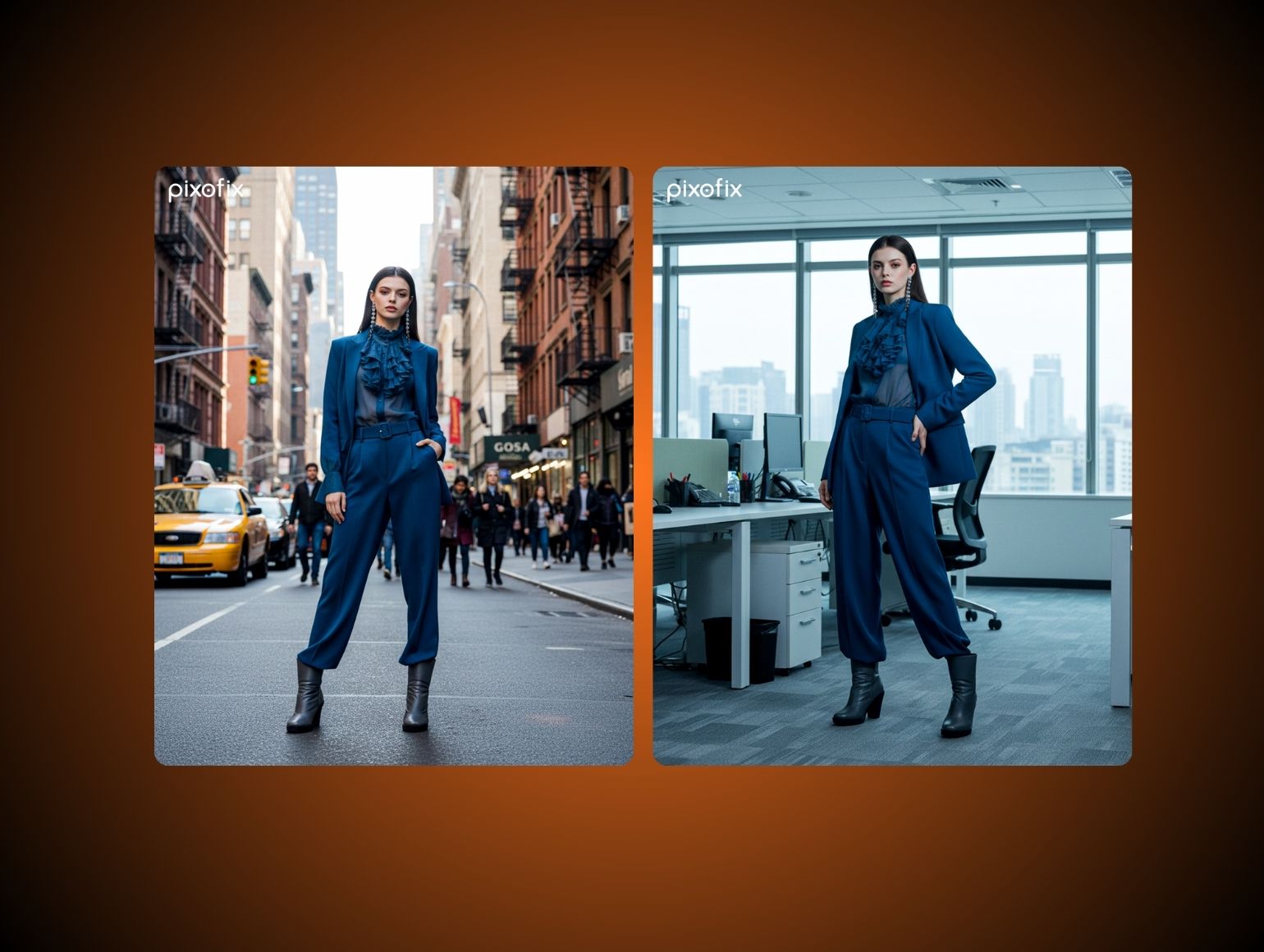
Pixofix runs a hybrid workflow: AI handles the repetitive first pass on high-volume batches, and every image still goes through human quality control before it ships. That combination is the practical answer to the tradeoff FixThePhoto's model does not really address for ecommerce brands, since FixThePhoto's ecommerce pricing tiers do not mention a QC step or an AI-assisted process at all. Pricing starts at $0.85 per image, turnaround runs 24 to 48 hours, and the team has spent eight years specifically on fashion retouching rather than splitting attention across weddings, real estate, and product photos the way FixThePhoto's tiered packages do.
Volume is where this shows up in practice. Our long-term work with Fashion Nova involved keeping high monthly image volume moving through the pipeline at fast, on-time turnaround, which is the same demand a growing fashion catalog puts on any retoucher. Current capacity runs at 5,000+ images without that reliability slipping.
Best for: fashion and ecommerce brands that need consistent, human-checked retouching at catalog volume, plus AI production capability, without splitting the work across a separate photographer-service and a separate AI vendor. It is not the right fit for someone who needs a single editorial shoot retouched once, rather than a recurring catalog.
For a deeper look at the retouching process itself, see our photo retouching service.
2. PixelPhant: Fast, Low-Cost Editing for Basic Ecommerce Touch-Ups

PixelPhant runs on pay-as-you-go pricing with no subscription, starting around $0.25 to $0.40 per image for background removal and basic edits, plus a $20 free trial credit to test the service first. Turnaround is fast: 12 hours standard, or 2 hours on the express tier.
That speed and price point work well for simple, repetitive edits at scale. Where it gets less clear is more involved fashion retouching, ghost mannequin work, or the kind of consistency check a human QC step provides on every image, since PixelPhant's pricing and process are built around fast basic edits rather than a stated per-image quality review.
Best for: ecommerce sellers who mainly need fast, cheap background removal or basic cleanup on straightforward product shots, not full fashion retouching depth.
3. Doopic: EUR-Based Pricing With Per-Option Add-Ons
Doopic is a Berlin-based provider, in business since 2014, with EUR-denominated pricing that starts around €0.50 to €0.80 per image depending on volume tier, plus separate charges for each editing option added. Standard delivery runs 48 hours and is free; faster turnaround costs extra. There is a €9.99 minimum order.
That per-option structure means the final price depends heavily on how many add-ons a batch actually needs, which makes it harder to predict total cost upfront compared to a flat per-image rate. It is also worth noting for US-based brands that EUR pricing adds a currency layer FixThePhoto and most of the other alternatives here do not have.
Best for: European ecommerce brands comfortable pricing in EUR and building their own combination of editing options per batch, rather than a flat all-in rate.
4. RetouchUp: Flat-Rate Pricing for Solo Photographers, Not Catalogs
RetouchUp, a brand of parent company Hollywood Fotofix, prices by flat rate per service rather than per photo tier: retouching starts at $2.50, general editing from $0.29, color correction at $0.25 per image ($0.15 at 50-plus images), and clipping path or subject isolation from $1.50. There is no subscription or monthly fee, just pay-per-order, with a 24-hour goal turnaround and a rush option at a 50% surcharge for roughly 12 hours. Unsatisfied edits get a free rework.
Of the five alternatives here, RetouchUp is the closest match to FixThePhoto's actual customer base: individual photographers handling portrait, wedding, and headshot work who want a simple flat rate per edit type, not a fashion or ecommerce brand running a catalog. Flat-rate pricing is easy to understand for a one-off order, but it does not scale the same way a volume-tiered or subscription model does once you are moving hundreds of SKUs a month.
Best for: solo photographers and small studios who want FixThePhoto's basic pricing simplicity without switching services, but who are not managing recurring catalog volume.
5. Pixelz: Subscription Pricing for Ecommerce-Only Volume

Pixelz, based in San Diego and operating since 2011, is built exclusively for ecommerce product images, it does not take personal or portrait work at all. Pricing runs on a subscription: the Professional plan is around $95 per month plus about $0.95 per image, with Enterprise starting near $1,995 per month at custom per-image rates for higher volume. A 14-day free trial is available, and Pixelz itself points to brands doing 500 or more images a month as the right fit.
That subscription-plus-per-image structure means the monthly fee is a fixed cost regardless of how many images actually move through in a slower month, which is different from a pure pay-as-you-go model. It works out well at steady, high volume and less well for brands with seasonal swings in shoot volume.
Best for: ecommerce-only brands with steady, predictable monthly volume of 500-plus images who are comfortable with a subscription commitment in exchange for guaranteed capacity.
Comparing the Five Alternatives at a Glance
Pricing structure, turnaround, and whether human quality control is part of the process vary more between these five providers than the per-image headline rate suggests. A subscription model like Pixelz's behaves very differently from Doopic's per-option add-on pricing, even when the final cost per image lands in a similar range. The table below lines up all five on the same criteria so you can compare them directly before reading the fuller breakdown of each.
Evaluating Features and Technology
The biggest technology difference across these six isn't whether a provider uses editors with Photoshop skill, all of them do, it's whether AI plays any documented role in the workflow, and whether a human checks the result afterward. Of the six, only Pixofix states both explicitly: AI handles the repetitive first pass on a batch, and every image still goes through human quality control before delivery.
None of the other five publish details on how automation fits into their process. That's not the same as saying they don't use any, it just isn't stated anywhere on their sites, so I'm not going to guess. FixThePhoto does list a separate AI-generated clothing models service in its navigation, but that's a distinct offering for creating AI models to wear a product, not a description of how retouching itself gets done or checked.
For a brand deciding between these six, this matters less as a checkbox and more as a practical question: what happens after a photo comes back edited. A published QC step means a defined second look before you ever see the file. Without one stated, you're relying on the individual editor's own process, which may be entirely fine, but you won't know the specifics until you've placed an order and can judge for yourself.
Making the Switch from FixThePhoto
Leaving any retouching provider comes down to matching the next one's process to how your images actually move. If you've been ordering FixThePhoto's ecommerce tier at low volume, most of the alternatives here will feel familiar, per-item or per-photo pricing without a long contract. The bigger shift is scale: FixThePhoto's own product line tops out at 3,000 images a month on its Business tier before you're into custom Enterprise pricing, which is a ceiling a growing fashion catalog runs into faster than expected.
A few practical steps make the switch smoother regardless of which alternative you choose:
- Export or request your current image library and any brand style notes you've given FixThePhoto, so a new provider isn't starting blind on color, background, or crop preferences
- Run a small trial batch before committing a full month's volume, most of these providers, including Pixofix, offer a trial or sample run
- Confirm the new provider's turnaround against your actual production calendar, not just the headline number, since rush tiers and add-on pricing can change the real delivery time
- Check whether pricing is per-image, subscription, or add-on based before comparing totals, since a lower headline rate can cost more once your typical batch's add-ons are factored in
Finding the Right Fit
None of the six providers here is a universal answer, and I'd be skeptical of any comparison that claimed one was. RetouchUp makes the most sense if you're a solo photographer or small studio who wants FixThePhoto's simplicity without the switch itself being complicated. PixelPhant and Doopic both suit ecommerce sellers running fast, straightforward edits, PixelPhant on speed and low cost, Doopic if you're pricing in EUR and want to build your own combination of edit options per batch. Pixelz fits brands with steady, predictable monthly volume above 500 images who don't mind a subscription in exchange for guaranteed capacity.
Pixofix is built for a more specific case: fashion and ecommerce brands running catalog-level volume who want AI speed and human quality control in the same workflow, rather than choosing between a fast automated tool and a slower fully-manual one. If that's not your situation, one of the other five is probably the better starting point, and I'd rather say that plainly than pretend a single option fits every reader here.
The decision usually comes down to three questions: how many images you're actually moving each month, whether you need a documented QC step or you're comfortable without one being stated, and whether a subscription or pure pay-as-you-go pricing matches how your production calendar actually looks.
The Closing Judgment
FixThePhoto works well for what it was actually built for: individual photographers who want simple per-photo pricing without complexity. The friction shows up when a fashion or ecommerce brand tries to run catalog volume through a service that treats product photography as a secondary offering rather than the main business.
Of the five alternatives here, the right one depends on your actual production pattern more than any single feature. If you're moving thousands of images a month and want a defined quality check on every one of them, that's the specific gap Pixofix is built to close. If your volume is lower, more European, or more photographer-style than catalog-style, one of the other four is likely the better starting point, and I'd rather point you there honestly than pretend otherwise.



.png)
.png)
